Oakland University is Seeking an Assistant Professor of Psychology (Quantitative Analysis)

The Department of Psychology at Oakland University (www.oakland.edu/psychology) invites applications for a tenure-track appointment with expertise in QUANTITATIVE ANALYSIS at the Assistant Professor level beginning Fall, 2021. Primary research interests should complement those of existing faculty in one or more of our graduate program areas: Behavioral Health, Social/Personality, Evolutionary & Comparative (https://www.oakland.edu/psychology/graduate-programs/). A market competitive salary plus excellent fringe benefits are provided.


Qualified applicants are expected to have a Ph.D. in Psychology at the time of appointment, have the ability to teach courses in basic and advanced statistics at the undergraduate and graduate levels, show evidence of  a productive research program, demonstrate experience with or a commitment to diversity and inclusion, and be prepared to mentor graduate students in our rapidly expanding M.S. and Ph.D. programs (see https://www.oakland.edu/psychology/graduate-programs/). In addition to collaborative opportunities with the faculty of the Oakland University William Beaumont School of Medicine, well-developed mechanisms are in place for establishing and funding multidisciplinary research across Oakland University faculty and the William Beaumont Health System.


Oakland University is a nationally recognized doctoral university of high research activity located on 1,443 acres of scenic land in the cities of Rochester Hills and Auburn Hills in Oakland County, Michigan (see www.oakland.edu). The University has 142 bachelor’s degree programs and 138 graduate degree and certificate programs. Academics include programs in the College of Arts and Sciences, School of Business Administration, School of Education and Human Services, School of Engineering and Computer Science, School of Health Sciences, School of Medicine and School of Nursing.


Applicants must submit electronically a curriculum vitae; a cover letter; a statement of professional interests and goals regarding teaching and research; a diversity statement that describes their interest or efforts in furthering diversity and inclusion, e.g., through research, mentoring, pedagogy, or activism; and up to three representative reprints, preprints, or working papers at http://jobs.oakland.edu/postings/19446. External reference letters should be submitted via the same job link. Inquiries should be directed to Andrea T. Kozak, PhD, Search Committee Chair, kozak@oakland.edu. Review of applications will begin immediately. To receive full consideration, applications must be submitted by October 15, 2020. Oakland University is an equal opportunity employer, and women and minority candidates are encouraged to apply.

Part-Time Statistical and Data Consultant Position at UCLA

The Geography of Philosophy Project (https://www.geographyofphilosophy.com/), funded by the John Templeton Foundation, seeks a part-time statistical and data analysis consultant for a period of one year, with the possibility of a renewal for an additional year and a half. The consultant would help to develop and run statistical models of cross-cultural survey data, and assist with analysis and write-up of results for project publications. The position includes co-authorship on all publications contributed to, as well as a consulting fee. Estimated workload is between 5 and 10 hours per week. The position is open at any level post-PhD. A record of modeling experience in quantitative social science, life sciences, or statistics required. Applicants please send current CV, sample publications, and a cover letter with names of three references to co-PI Professor Clark Barrett at hclarkbarrett@gmail.com. Informal inquiries also welcome. Candidates who can contribute to the diversity and excellence of our research team are particularly encouraged to apply. Applications will be considered until the position is filled.

Call for Unpublished Papers on Moral Economic Behavior for Meta-Analysis

Christian T. Elbaek, Panagiotis Mitkidis, Lene Aarøe, & Tobias Otterbring are currently collecting data for the first meta-analysis on how material scarcity (such as food scarcity, water scarcity or financial poverty) and self-regulatory-resources, respectively, affects moral economic behavior. Specifically, we are looking for studies with behavioral dependent measures of economic cheating, which also entail studies that use hypothetical choices as a measure of behavior.

Therefore, if you are currently conducting research within this area and have current working papers, unpublished papers or papers under review, we kindly ask you to reach out to us, so we can include such research into our meta-analysis.

If you are in doubt of whether your paper would fit the criteria of such a meta-analysis, we also strongly encourage you to reach out to us, as we want to exhaust all opportunities for including relevant research in our meta-analysis.

The pre-registration of the meta-analysis can be found at https://osf.io/dru4w

Please contact corresponding author Christian T. Elbaek with any enquiries using the below information:

E-mail: chel@mgmt.au.dk
Tel: +45 8716 4945

Warmest wishes,
Christian T. Elbaek, Panagiotis Mitkidis, Lene Aarøe, & Tobias Otterbring.

2020 Margo Wilson Award Winner

In 2009, the Publications Committee of HBES initiated an annual award for the best paper in each volume of Evolution and Human Behavior, “The Margo Wilson Award.” The award carries a cash prize of $1,500, and the winning paper is chosen by the Editorial Board of Evolution and Human Behavior.


This year, the competition for this award was fierce. At the beginning of the year, the Editors to nominated their selections from the 2019 volume. About a dozen excellent papers were nominated. One rose to the top. The winner of this year’s Margo Wilson Award goes to Professor Daniel Conroy-Beam and colleagues for their paper entitled “Assortative mating and the evolution of desirability covariation.” Congratulations to Daniel and his entire team!


Conroy-Beam, D., Roney, J. R., Lukaszewski, A. W., Buss, D.M., Asao, K., Sorokowska, A., Sorokowski, P., et al. [105 others] (2019). Assortative mating and the evolution of desirability covariation. Evolution & Human Behavior, 40 (5), 479-491.

 Abstract: Mate choice lies close to differential reproduction, the engine of evolution. Patterns of mate choice consequently have power to direct the course of evolution. Here we provide evidence suggesting one pattern of human mate choice—the tendency for mates to be similar in overall desirability—caused the evolution of a structure of correlations that we call the d factor. We use agent-based models to demonstrate that assortative mating causes the evolution of a positive manifold of desirability, d, such that an individual who is desirable as a mate along any one dimension tends to be desirable across all other dimensions. Further, we use a large cross-cultural sample with n = 14,478 from 45 countries around the world to show that this d-factor emerges in human samples, is a cross-cultural universal, and is patterned in a way consistent with an evolutionary history of assortative mating. Our results suggest that assortative mating can explain the evolution of a broad structure of human trait covariation.

A Letter from the Editor, Deb Lieberman

Dear HBES Members,

It has been a busy summer at Evolution and Human Behavior and I am pleased to provide you with several updates.


EHB Special Issues

Currently at EHB, we are working on the publication of two special issues. The first special issue, organized by Joe Henrich, Coren Apicella, and Ara Norenzayan, examines recent efforts to expand evolutionary social science research beyond WEIRD societies. The Beyond WEIRD special issue will be the next issue published (issue 5, 2020). The second special issue, organized by Willem Frankenhuis and Dan Nettle, is on Life History Theory and will be the 6th and last issue of 2020. In each issue’s Editorial/Introductory article, there will be details regarding how to submit commentaries—a feature I’d like to continue with each Special Issue published at the journal. I would like to take this opportunity to thank all of the Editors of both special issues for their hard work in pulling together excellent panels of papers. These special issues advance an important goal of the journal, which is to foster discussion and debate of scientific ideas as they relate to human evolutionary science. Thank you again!


EHB Reproductions

We are proud to announce a new article format at EHB called EHB Reproductions. EHB Reproductions report on efforts to replicate empirical research previously published in EHB. Reproductions follow the original methods and procedures to create conditions under which the original hypotheses can be tested. Deviations with respect to participants, materials, procedures, and analyses will be evaluated on a case-by-case basis. In general, though, researchers should attempt to use the same materials, procedures, and analytical techniques as employed in the original article, and, while I think this goes without saying, authors of original articles are encouraged to provide all necessary materials for successful attempts at replication.


An EHB Reproduction includes an Abstract of 250 words. The Introduction should identify the paper being replicated, the hypotheses being tested, the rationale for replication, the justification for the methods (including statistical power), and the main conclusions of the current work. The Introduction and Discussion should be no more than 1000 words combined. (The original article should have done the literature review and theoretical heavy lifting mostly freeing Reproductions from this task.) There is no word limit for Methods and Results, but authors are encouraged to be succinct. In the Methods, authors should be clear regarding the sample used, and any methodological or analytical deviations from the original article with justification. Ideally, references should be limited to around 10. Titles should conform to the following: “EHB Reproduction: Author (et al.), Date”. EHB Reproductions will be evaluated based on quality, not outcome. Authors of the original article will be offered an opportunity to respond to the replication effort in a commentary. Currently, EHB Reproductions are limited to empirical articles. Conceptual replications, including modeling papers, should be submitted as Research Reports.


Updates on Sample Description

In an effort to provide greater detail on samples reported in Research Reports and EHB Reproductions, the submission process will soon contain information regarding how to describe samples in both the Abstract and Methods. The Editorial Board is currently finalizing these instructions and we will post all updates to the online Guide to Authors.


Updates on Database and Stimuli availability

As a general policy, EHB will now require researchers during the submission process to provide access (via a link to an online repository or via supplementary materials) to anonymized datasets (when appropriate) and, when feasible, stimuli used to carry out the reported research.


Updates on Tables and Figures

This might seem trivial, but to facilitate peer review, we now ask that all tables and figures be embedded in the text of the submitted manuscript in their appropriate location in addition to being uploaded as separate files. (It’s the little things that matter.) I think that’s it for updates.


Have a safe and healthy start to the new school year,

Deb Lieberman, Editor-in-Chief, Evolution and Human Behavior

HBES Volunteer Coordinators Needed

We are looking for 2-3 postdoctoral researchers or graduate students to organize a new HBES Virtual Roundtable Discussion Series. Responsibilities include organizing, promoting (in coordination with the Communications Officer), and introducing each event. This is a great networking opportunity and comes with free HBES membership.


Interested persons should send an email to Coren Apicella capicella@psych.upenn.edu and Chris von Rueden cvonrued@richmond.edu by August 15th.

Change in Hormonal Contraceptive, Change in Heart?

by Juliana French & Andrea Meltzer


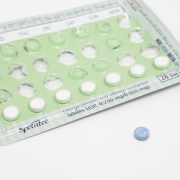
140 million. That’s how many women world-wide are estimated to use hormonal contraceptives such as The Pill. The main function of hormonal contraceptives (and a leading reason for why so many women use them) is to decrease the likelihood of conception. But through administering synthetic hormones to achieve protection against unwanted pregnancy, hormonal contraceptives incidentally alter a myriad of other physiological and psychological processes. In a recent paper, we examined the extent to which hormonal contraceptives may alter processes important for maintaining satisfying relationships, such as sexual satisfaction.

Sex is a central feature of adult romantic relationships, which is reasonable considering the adaptive value sex has for reproductive success. It is therefore not surprising that frequent and satisfying sex plays an important role in the maintenance of people’s long-term romantic relationships. Nevertheless, one of the most common side effects of hormonal contraceptives—an evolutionarily novel medical advancement—is decreased sexual desire among women who use them.

Hormonal contraceptives are therefore, by definition, an evolutionary mismatch. A classic, easy-to-digest example of an evolutionary mismatch concerns modern food availability. Humans have an evolved tendency to seek highly caloric foods because this would have been adaptive in our evolutionary history when such foods were scarce. In 2020, however, this evolved tendency may lead you to crave chocolate chip cookies and fast food. When not kept in check, these (once adaptive) cravings contribute to modern rates of obesity. Similar to the abundance of highly caloric foods in our modern environment being mismatched to our evolved psychology, hormonal contraceptives may be mismatched to our evolved relationship processes, explaining, at least in part, some relationship dysfunction such as sexual dissatisfaction.

So, now you may be wondering, “although hormonal contraceptives help to prevent unwanted pregnancy, are they harmful for my relationship?”

Not so fast – there’s more to the story.

A recent study suggests that whether a woman uses a hormonal contraceptive may be less important for her relationship than whether she changes her hormonal contraceptive use after relationship formation. Imagine one woman, for example, who was not using a hormonal contraceptive when she met her partner but decides to start using The Pill after they have been together for a little while (perhaps because she is likely to engage in relatively more frequent sex and doesn’t want to become pregnant). Imagine another woman who was using The Pill when she met her partner but decides to discontinue using hormonal birth control at some point in her relationship (perhaps because she and her partner are trying to become pregnant).

Hormonal contraceptive use that differs from a woman’s use when she met her partner is called hormonal contraceptive incongruency. Notably, many women become hormonal contraceptive incongruent at some point during their ongoing, long-term relationships. Moreover, because many women begin and discontinue hormonal contraceptives multiple times in the course of a relationship, they repeatedly fluctuate between being congruent and incongruent. Are women less sexually satisfied during those times when their hormonal contraceptive use is incongruent (compared to congruent) from their use at relationship formation? This is exactly the question we sought we answer.

We tested whether such within-person changes in hormonal contraceptive use that results in incongruency is associated with decreases in sexual satisfaction. To do this, we asked 203 heterosexual, newlywed wives if they were using a hormonal contraceptive when they began dating their husbands. Then, at the start of their marriages and again every four to six months for up to four years, those wives (a) completed a measure of sexual satisfaction and (b) reported whether they were currently using a hormonal contraceptive. Results demonstrated that wives reported lower sexual satisfaction at times when their hormonal contraceptive use was incongruent with their use at relationship formation compared to times when their hormonal contractive use was congruent with their use at relationship formation.


Wives reported lower sexual satisfaction at times when their hormonal contraceptive use was incongruent with their use at relationship formation


There are two ways to be incongruent with respect to hormonal contraceptive use, however. Whereas some women do not use hormonal contraceptives when they meet their partners and become incongruent when they begin using them, other women use hormonal contraceptives when they meet their partners and become incongruent when they discontinue their use. Is one form of incongruency more strongly tied to decreases in sexual satisfaction than the other? The short answer is, no. In our data, changes in sexual satisfaction that were associated with incongruency did not differ for wives who were incongruent by “starting” hormonal contraceptives after relationship formation versus those who were incongruent by “discontinuing” hormonal contraceptives after relationship formation.

These findings suggest that simply using a hormonal contraceptive may not necessarily increase one’s risk of experiencing sexual dissatisfaction in a relationship. Rather, it is hormonal contraceptive incongruency—either beginning or discontinuing the use of hormonal contraceptives after relationship formation—that seems to be associated with future sexual problems.

This work represents an important methodological advancement for research examining the implications of hormonal contraceptive for romantic relationship processes. Although others have previously demonstrated associations between hormonal contraceptive incongruency and relationship processes (for example, relationship satisfaction and jealousy), this paper is the first to do so using a longitudinal design and within-person analyses. Cross-sectional studies have sometimes failed to detect between-person effects of hormonal contraceptive incongruency, and—indeed—when we examined our data using between-person analyses at baseline we also did not detect differences in sexual satisfaction between women who were congruent versus incongruent. Crucially, the longitudinal method and corresponding analyses that we conducted in this paper enabled us to statistically separate those non-significant between-person differences in incongruency from the key significant within-person changes in incongruency that are central to the underlying phenomenon.

We see this as a fruitful starting point for many future research questions. For example, is changing your type of hormonal contraceptive—perhaps by either switching from one brand of The Pill to a different brand or to a different hormonal method such as The Patch—also a form of incongruency? And, if so, are these other potential forms of incongruency also detrimental to relationships?

Without having the longitudinal data to answer these questions, we can only speculate. It seems probable that, yes, there are likely multiple forms of hormonal contraceptive congruency. But the extent to which other forms of incongruency may impact relationship outcomes, such as sexual satisfaction, likely depends on how different the incongruency-related changes actually are. That is, changing from a progestin-only pill to a different progestin-only pill is less of an incongruency than changing from a progestin-only pill to a combination (estrogen and progestin) pill, and the latter is still less of an incongruency than discontinuing hormonal contraceptives altogether.

When women discuss birth control options with their medical doctors, the conversation often revolves around common side effects, such as weight gain, headaches, mood changes, and decreased libido (to name a few). Relational side effects that may occur as a result of changes in hormonal contraceptive use, such as decreases in sexual satisfaction, are less-often (if ever) considered or discussed. There are many factors that contribute to sexual satisfaction—for example, how attracted you are to your partner (which, by the way, hormonal contraceptives may also alter)—and our recent research suggests that hormonal contraceptive incongruency is one such factor. Given the adaptive significance of long-term relationships for humans, it is paramount to understand how modern novelties such as hormonal contraceptives can impact relationship processes and stability.


Read the paper: The implications of changing hormonal contraceptive use after relationship formation

Calculating Mate Value: A “Weighty” Task

By Gary Brase, Sydni Huxman & Jordann Brandner


Most of the time, you can only have one. Whether it is a college, a car, a home, or a relationship partner, people make difficult decisions about which options to pursue and which to not pursue. A big part of what makes these decisions difficult is that the options differ along many different traits. Possible relationship partners, for example, can vary on traits such as personality, intelligence, similarity of beliefs, health, physical attractiveness, facial attractiveness, financial status, and social status. These are all different traits, measured on totally different scales, yet somehow they must be combined into an overall evaluation and decision. There is a term for this overall evaluation: mate value. The decision about which possible partner to choose (“mate choice”) becomes easy once the mate values of the possible candidates are evaluated– choose the one with the highest mate value (assuming they will also choose you). That bypasses actually explaining much of the tricky work in this process, though. How is mate value calculated?

It turns out that there are many different possible ways to combine these qualitatively distinct traits to get an overall evaluation. Some strategies may allow high values on a trait to make up for being low on another trait, known as compensatory strategies. Others may be more non-compensatory, where traits can be “deal breakers” and a low value can eliminate a person from consideration. For example, if mate values is calculated with a compensatory calculation, extreme intelligence in a potential partner could make up for a poor financial condition. On the other hand, if mate value is based on a non-compensatory calculation, then no amount of intelligence can compensate for unacceptably poor finances. Yet, other calculations may be some mixture of the two, combining some compensatory aspects and some non-compensatory aspects.

In our recent research, we tested the performance of over seven different plausible ways that mate value could be calculated, across three different studies that used different types of information presentations. Our results show that the compensatory weighted additive model – where all the traits are combined, each adjusted for importance – outperformed all the others. The other models tested included an equal weights model, a “take-the-best” model, an aspiration models, a threshold model, Euclidean distance models, and correlational models. The last two models were also evaluated using participant’s rating of their “ideal” partner’s traits and their “realistic” partner’s traits (because you don’t always get everything you ideally want!).

One study had people choose “Person A” versus “Person B” based on tables that summarized each person’s as being either high or low on each of multiple traits (Personality, Intelligence, Similarity, Health, Body Attractiveness, Face Attractiveness, Finances, and Social Status). Each person in the study repeated this choice between two possible partners for 45 pairs of profiles, which were specifically designed to contrast the different possible mate value calculations. A second study used the same design, but had bars to show how high each possible partner was on each of the traits. A third study was designed to be closer to the format of dating sites; it used photos for each possible partner and descriptions of how well the person rated on each trait.

Regardless of how information was presented to people, the weighted additive model outperformed all the other options in accounting for the choices people made. Almost intuitively, it seems realistic that in the world of dating, high values on one trait may be able to make-up for other traits that they were lacking. Certainly, from an evolutionary standpoint, it might make sense that our ancestors would be willing to accept a partner who was extremely physically fit and healthy so that they could produce healthy offspring, even if they did not totally align in their belief systems or personality types. Part of what makes this research challenging is that all of the methods for integrating traits to calculate an overall mate value perform better than chance. The weighted additive model, though, did the best by predicting more of the choices than other models.


Almost intuitively, it seems realistic that in the world of dating, high values on one trait may be able to make-up for other traits that they were lacking.


Dating and choosing a partner is a complex process in the real world, and there are other factors involved beyond these studies. For example, potential partners (unlike cars and houses) have to reciprocate a positive choice. There are also possibilities that mate value evaluations incorporate other traits, or differ across demographic factors (such factors could include individual differences within populations or across populations – including non-WEIRD populations). There is also fascinating recent work on how people integrate the different traits of potential friends, extending this work to an additional, rich topic. Although there is much more work to be done in this arena, there is now strong evidence for the compensatory nature of traits in human dating decisions.


Read the paper: “Weighting” to find the right person: compensatory trait integrating versus alternative models to assess mate value