Culture and Context Matter when Thinking about the Phenomena of Ownership

– by Ulises Espinoza

The evolutionary social sciences have long sought to comprehend human commonalities. Among these inquiries, a central focus revolves around identifying the traits that collectively compose the so-called “human nature” of our species, in both their psychological and behavioral dimensions. It prompts us to ponder whether certain traits, transcending cultural boundaries, are universally present during early childhood. This often involves the establishing of connections between these putative universal or prevalent traits and their evolutionary origins, shaped by the forces of natural selection in the distant past. One particularly intriguing arena of exploration is in the domain of ownership, and the conceivable underlying psychological and cultural norms and regulations that govern it.

It’s likely that all humans have the capacity to recognize ownership in themselves and others. However, it is an open question whether there is a specific, species-typical human psychology of ownership, and whether that psychology contains particular rules or principles. In principle, it is possible that ownership is a purely cultural phenomenon. But there may also be evolutionary roots to how we conceptualize ownership and to the domains to which ownership is extended. In a recent paper, H. Clark Barrett and I delve into the intriguing question of whether ownership has possible universal features. We explore a set of norms called “first mover norms,” which suggest that the person who takes the initial action or makes the greatest effort towards an ownable object is socially recognized as its rightful owner. These norms can apply to various tangible and intangible items. Studies have shown that children, in primarily Western samples, tend to develop these first mover intuitions during early to middle childhood, suggesting a potential universality. Cross-cultural research has also supported these findings, although with some variations in developmental patterns. However, when examining ethnographic evidence, the picture becomes more complex. While first possessor rules exist in non-Western legal systems, many societies have diverse ownership norms. Ownership rights can be communal, partial, or subject to negotiation based on principles like kinship, sharing, stewardship, use, and need. Even in cases where first mover norms appear to apply, they often don’t confer permanent, individual ownership, as other cultural principles determine rights.

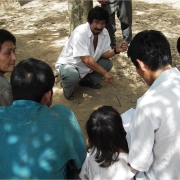
Our investigation ventured into the realm of ownership within Achuar communities, renowned for their distinctive fusion of individual autonomy and robust communal values. To shed light on the subject, we conducted experimental scenarios involving ownership claims in two culturally pertinent domains: land and hunting. To ensure cross-cultural comparability, we also included participants from the United States. Among the American participants, the notion of “first possession” held considerable sway in their judgments across various scenarios, whether related to hunting or land. Their consistent preference for the first possessor as the rightful owner aligns with the historical and cultural influences in American and European societies, where the concept of first possession has exerted a profound influence on the development of legal and cultural norms. Conversely, Achuar participants showed a less consistent bias towards first possession, depending on the context. In hunting scenarios, they recognized the person who captured a game animal as the owner, reflecting their cultural practices. However, when it came to assigning ownership of land, they prioritized factors like use and improvement over mere first possession. This reflects their belief in land stewardship and the idea that ownership is not static but earned through active use and care. These results highlight the dynamic nature of the of the use of first-mover norms, particularly concerning their role in determining actual ownership across diverse cultural contexts. Americans, and potentially Westerners more broadly, appear to lean toward the heuristic of first possession, while other cultures, exemplified by the Achuar, consider a broader spectrum of factors when adjudicating ownership. The concept of ownership is nuanced and exhibits considerable divergence on a global scale, challenging the notion of a universally shared human comprehension of this concept.

Our findings underscore the necessity of exercising caution when extrapolating from specific cultural samples to the broader global population (Barrett, 2020). This holds particularly true for various facets of human psychology, including those, like ownership, that are profoundly influenced by cultural factors. It suggests that studies conducted in the United States and Europe may possess limited applicability when seeking to generalize findings to broader populations. It prompts us to reevaluate the notion that an evolved psychology of ownership, while potentially existing in humans, may be significantly influenced by cultural distinctions and the intricate tapestry of cultural history. Our study represents a modest and preliminary exploration of ownership intuitions within Achuar communities. We believe that future research endeavors in this community, as well as in other Indigenous communities characterized by distinct ownership traditions diverging from those of European-descendant communities, hold the key to presenting a more comprehensive portrait of the variations in human ownership psychology and the commonalities that may exist across diverse human societies. Each contemporary human community serves as a valid exemplar of the myriad potential configurations of evolved human psychology, each bearing an equally extensive cultural heritage. Rather than idealize certain communities as superior or inferior exemplars of evolved human nature, evolutionary social scientists can reap significant benefits from examining the complete spectrum of contemporary human psychologies. This approach provides valuable insights into the essence of human nature, elucidating both its defining characteristics and the boundaries that demarcate it.

Read the original paper: Espinoza, U., & Barrett, H.C. (2023). Cultural and contextual variation in first mover norms of ownership: evidence from an Achuar community. Evolution & Human Behavior, 44(6), 584-596.

This article is part of the Special Issue – Dispatches from the Field Part II.
Human intergroup relations are profoundly flexible. Our science needs to catch up.

– by Anne Pisor

Is intergroup aggression part of human nature? Or is intergroup tolerance part of human nature?

Yes and yes.

While such simple headlines make great clickbait, they oversimplify – yet both have a grain of truth. Humans are both profoundly hostile and profoundly tolerant toward out-groups. We’re profoundly flexible.

Flexible intergroup relations have deep evolutionary roots. Though chimpanzees are often thought of as hostile toward out-group members and bonobos as tolerant, there is some variation in chimpanzee intergroup relations and quite a bit of variation in bonobos. Given the range of opportunities for conflict and cooperation in humans – from defending resources and protecting ourselves, to exchanging resources and ideas – the profound flexibility of human intergroup relations shouldn’t surprise us.

Indeed, as Cody Ross and I write in a new piece in Evolution & Human Behavior, our behavior toward members of other groups is influenced by a whole pathway of things, starting with context (are resources scarce?) and individual characteristics (did my past interactions go poorly?) that affect our beliefs, attitudes, and motivations – our internal states. Context, individual characteristics, and internal states influence how we behave.

For example, take research led by Cody in rural Colombia, where indigenous Emberá and Afrocolombians live side by side – sometimes with discord, sometimes without. In one community, Emberá have more control over natural resources and there’s a history of intergroup tensions. Even though Afrocolombians are wealthier than Emberá in that community, Afrocolombians feel that intergroup tensions are high and cooperation low – and they share less money and food with Emberá households accordingly. In another community with less unequal resource control and less history of intergroup tensions, wealthy Afrocolombians share with poorer Emberá. The impact of context on our internal states and our subsequent cooperative behavior is not to be underestimated.

Capturing the profound flexibility in human intergroup relations requires methods that document it accurately. In our Evolution & Human Behavior article, Cody and I focus on a subset of intergroup relations called parochial altruism: in-group favoritism paired with out-group hostility. Variance in parochial altruism is best documented using a combination of methods, we argue, like experiments that measure who people prefer to share with, observations on who they actually share with in everyday life, and self-reported internal states.

Using just one method can generate bias. For example, as Cody has documented in Colombia, people may not reciprocate sharing in real life because they can’t afford it, but will preferentially repay real-life sharing in an experiment when researchers provide the money. In short, to triangulate reality, researchers must approach it from a variety of angles.

If intergroup behavior is so flexible in humans, why are simple headlines about it so common? One reason is that they often seem to either confirm or challenge our own internal states – “yes, of course humans are inherently violent”; “no, violence isn’t part of human nature!” Our own internal states are themselves products of our experiences and cultural contexts, among other things. Journalists know that headlines that confirm or challenge our internal states excite our emotions, making us more likely to click.

But these headlines are also common because researchers have their own internal states too, and these influence what research actually gets done. As Brian Hare and Vanessa Woods remind us in Survival of the Friendliest, research on intergroup violence ticked up after World War II: researchers wanted to understand how atrocities could be committed on such massive scales. Science can be guided by researchers’ own experiences or by history, which impact researchers’ beliefs about intergroup hostility, tolerance, and peace.

When there is a greater diversity of experiences among researchers, science is the better for it. It increases the diversity of research questions researchers ask, and having a range of research questions can better tap the range of the human experience – our flexibility in intergroup relations, for one. In turn, this data can be leveraged for policy recommendations and action – for example, what features of context, individual characteristics, and internal states have the greatest downstream influence on intergroup behavior? Which lever should we pull to intervene, reducing intergroup hostility?

As Cody and I highlight, answering these diverse questions about intergroup relations requires data that accurately reflect the diversity of human experiences – our profound flexibility. Ensuring data collection reflects research questions, triangulating across multiple types of measures, striving to ensure measures reflect reality – this will improve our understanding of human intergroup relations and the upstream factors that influence it.

War in Israel and Gaza, tensions over fossil fuels at COP28, impasses in parliaments and US Congress – these stories bring to mind humans’ profound intergroup hostility. Communities helping one another after a storm, organizations standing together on picket lines – these bring to mind humans’ profound intergroup tolerance. For researchers and non-researchers alike, our beliefs, attitudes, and motivations are affected by what’s around us and by our past experiences. When researchers bring that diversity of experiences to science, our understanding of human nature can also become more accurate – but only if researchers also get accurate measures of what humans are up to. Existing data already undercut the narrative that humans are doomed to favor in-groups and be hostile toward out-groups: the data instead reveal profound variability. Recognizing this variability can push scientists to challenge their own preconceptions about human nature and to draw upon a more diverse toolkit, improving our understanding of the flexibility of intergroup relations. The better we understand it, the better positioned we’ll be to address the pressing social issues of the 21st century.

Read the original article here: Pisor, A.C., & Ross, C. (in press). Parochial altruism: what it is and why it varies. In press at Evolution & Human Behavior.

Author’s note: the author thanks Cody Ross, Kris Smith, and Eleonora Zanetti for helpful comments on this piece. Photo credit: Karl Frost.

Unmaking egalitarianism

– By Christopher von Rueden

(Photo credit: Chris von Rueden. Tsimane man mediating a dispute over land)

The pre-agricultural past may have been more politically diverse than often assumed (see here), but it is likely that political egalitarianism predominated. As observed in many modern hunter-gatherers, political egalitarianism is a collectively-enforced emphasis on individual autonomy and freedom from coercion. A long-debated question, therefore, is why individuals in relatively egalitarian societies would acquiesce to greater political inequality, particularly where this wasn’t forced on them by outsiders.

In their recent tome The Dawn of Everything, the anthropologists Graeber and Wengrow argue that political transitions throughout history were the result of ideological experimentation, largely untethered to the material or demographic conditions of societies. Their argument gains apparent support from the fact that even some hunter-gatherers had chiefs and kept slaves. Hunter-gatherers from the Pacific Northwest coast of North America are the canonical example. Clearly, agriculture is not a necessary explanation of the “origins” of such inequality. Nor is it sufficient. Many societies that practice minimally intensive agriculture (i.e. horticulture) are relatively egalitarian.

Models that focus less on subsistence type per se have greater power to explain why societies differ in political inequality. Different models emphasize different determinants of inequality, which include: (1) reduced dependence on widespread food-sharing to buffer risk, which can weaken motivations to enforce political equality (see here); (2) larger and denser populations, which can increase the appeal of formal leadership as a solution to interpersonal conflicts, coordination problems, and collective action problems (see here); and (3) disparity in control of productive land and other forms of wealth, which engenders relationships based on patronage and indebtedness (see here).

Debate over these and other models continues because studies that compare models are few. Furthermore, tests tend to rely on archaeological cases studies or cross-cultural comparison based on ethnographic databases like the Ethnographic Atlas. These approaches typically lack fine-grained data on changes in inter-personal relationships to directly test parameters of the relevant models.

In my paper recently published in Evolution and Human Behavior, I present another approach: longitudinal observation of a current small-scale society (Tsimane horticulturalists), who retain some independence from state institutions and whose politics remain fairly egalitarian. Most extant small-scale societies like the Tsimane have been increasingly exposed to the threats and opportunities associated with market integration and inter-cultural exchange, which I argue can generate the conditions upon which various models of political inequality depend.

The Tsimane people live in villages ranging from 30 to 700 individuals in the tropics of lowland Bolivia. Their economy is based on food-sharing and collaboration in horticulture (plantains, manioc, rice, and corn), hunting, fishing, and gathering, which tend to be concentrated within extended families residing in the same or nearby households. Average individual income for the Tsimane is <2 US dollars per day, largely from the sale of horticultural products and lumber and from sporadic wage labor with loggers or cattle ranchers. Income opportunities accelerated in the 1970s, with the arrival of roads to the nearest market town.

Tsimane politics is largely informal. Conflicts tend to be resolved by the parties directly involved, and sometimes third parties within a village may step in to help mediate. Villagers also hold occasional meetings, which are used to mediate more intractable conflicts or to plan collective action, such as maintenance of community trails, confrontation of illegal loggers or other colonists, and negotiation with merchants and outside political bodies.

For my recent paper, I describe variation in men’s political inequality across four Tsimane villages, as well as variation over time within one of these villages. I measure inequality as the Gini coefficients of villagers’ rankings of each other, according to “whose voice carries the most weight during community debates”. The focus on men is largely due to an absence of data on women’s political influence beyond a single village. In that village, men’s political influence was more variable and on average higher relative to women’s political influence (see here).

I found that market proximity matters. Inequality in men’s informal political influence is greater the closer the village is to the market town, and increased over a twelve-year period in the village closest to the market town. So what about market proximity could explain these trends? Villages closer to the market have higher average household incomes, which could undermine the incentives to widely share food as well as the status-leveling that helps maintain such sharing. However, I found no evidence consistent with this possibility: average number of food-sharing partnerships did not decline with greater political inequality.

There is greater evidence that Tsimane political inequality reflects demand for leadership, in order to more effectively deal with increased intra- and intergroup conflict. In the more market-proximate and politically unequal villages, men report more interpersonal conflicts, particularly conflicts with non-Tsimane, and the most influential men perform a much larger share of conflict mediations, like the man in the photo at the top.

While income inequality did not clearly associate with political inequality either cross-sectionally or longitudinally, men who use their income to hire or indebt others may gain political advantage. Closer to the market town, a small percentage of field labor help is now paid rather than reciprocated in kind. However, the most influential men are only slightly more likely to be labor patrons, and only in the final year of analysis did labor patronage predict men’s influence independent of other predictors, including conflict mediation.

Wealth differentials will likely increase in the future as some Tsimane further scale up their cash cropping via labor patronage, while others opt for more traditional lifestyles. Over the longer term, land may become de jure privately owned at the household level in response to escalation of land conflicts. These changes may precipitate a shift from more mutually beneficial political inequality–motivated by a demand for leadership– to ever-growing and elite-enriching political inequality–enabled by differential resource control. Indeed, such a shift may have been characteristic of inequality increases throughout the Holocene (see here). Studies of the Tsimane and other small-scale societies in transition will help us better understand how continuous change in political inequality can precipitate more qualitative shifts, such as the emergence of chiefs or other inherited positions of coercive authority.

Read the original paper here: von Rueden, C.R. (2023). Unmaking egalitarianism: comparing sources of political change in Amazonian society. Evolution & Human Behavior, 44(6), 525-652.

Author’s Note: The paper describing the above was published as part of the Evolution and Human Behavior special issue, “Dispatches from the field: insights from studies in ecologically diverse communities: Part 2”. The special issue is dedicated to the late John Patton, and also acknowledges the recent passing of John Tooby. Their influence on my paper and the others in the collection is enormous. I am equally indebted to my dissertation advisor and frequent collaborator Mike Gurven, Hillard Kaplan, and the Tsimane Health and Life History Project. We recently established a scholarship fund for the first Tsimane women and men to attend university, in disciplines like medicine, law, engineering, and business administration. Consider supporting us in building a generation of Tsimane leaders with the capacity to meet their many challenges to a sustainable future.


Evolutionary-friendly job in Social Psychology in Colorado Springs

The University of Colorado, Colorado Springs, has a faculty position available for a Social Psychologist with the Area of Specialization open. HBES member Laith Al-Shawaf is eager for some evolutionary colleagues, so if you’re looking for something in Social Psychology, you should apply!

Here’s the job ad: https://rb.gy/bfkpam

Priority will be tgiven to applications received before Jan 7th, 2024.