Arranged and Self-Choice Marriage: Implications for Child Outcomes

– By Kristin Snopkowski & Annemarie Hasnain

While free choice of spouses (i.e., the love marriage) is the norm in western countries today, arranged marriage has historically been a common form of marriage.  We see this today in some cultures, like India and Pakistan where it is still common, and in the past century in many other parts of the world, including many small-scale foraging populations. Given the interest of evolutionary researchers on the topic of mate choice, which requires that individuals choose their own mates, do arranged marriages lead people to marry less preferred partners and what are the implications? Research in our recent Evolution and Human Behavior article, “Maternal investment in arranged and self-choice marriages: A test of the reproductive compensation and differential allocation hypothesis in humans,” seeks to understand the role arranged marriage plays in reproductive and child outcomes.

Research has shown that the mate one would choose for themselves may be different from the one that would be chosen as a son- or daughter-in-law. Most of this research comes from surveys that ask individuals for their preference in a mate and their preferences for a son or daughter’s spouse or those that separately ask parents and adult children for their preference in the adult child’s spouse. These studies tend to find differences, where people prefer attractiveness and an exciting personality in a potential spouse, but instead prefer similar ethnic background, religion, and social class in a potential son- or daughter-in-law.

Mating preferences likely evolved because of the fitness implications of these choices. Evidence from the non-human animal literature shows that when individuals are forced to mate with less preferred or unattractive partners, their offspring do worse (i.e., have reduced fitness).  This may be because attractiveness is an honest signal of immune function or that preferred partners have better territory that allow them to invest more in offspring or that preferred mates are more likely to produce offspring that are then preferred by individuals in the next generation, increasing their chance of finding mates. Regardless of the mechanism, these findings suggest that arranged marriage may impede an individual’s choice of an optimal partner.

There are two hypotheses that have been developed to explain investment patterns in offspring from non-preferred or unattractive partners.  The first hypothesis is the differential allocation hypothesis, which argues that individuals will invest less in the offspring of unattractive mates.  Conversely, the second hypothesis, called reproductive compensation, states that individuals will invest more in the offspring of non-preferred mates as a means to compensate for their offspring’s likely reduced prospects. These hypotheses have not previously been tested in humans, but arranged marriage may provide an opportunity to explore these hypotheses in humans. This requires that the spouse of individuals in arranged marriages are in some way less preferred, which some empirical evidence suggests given two assumptions: first, that mating preferences are evolved to optimize mate choice and, in turn, offspring outcomes and second, the preferences for a mate are different than the preferences for a son- or daughter-in-law.

Our paper tests whether there are any differences in how mothers invest in their offspring depending on their marital status (arranged marriage or self-choice marriage). The sample included about 8400 women living in Indonesia who were surveyed longitudinally from 1993 to 2015.  We examined factors like prenatal checkups, birth weight, breastfeeding duration, children’s height-for-age and weight-for-age, to determine if there are differences based on whether the parents were in an arranged marriage. We also examined fertility outcomes including the number of live births, the number of living children, marital fertility (number of births per years married), and the number of stillbirths and miscarriages.

The results show that arranged marriage is decreasing in Indonesia.  For women born prior to 1930, about 55% reported their marriage as arranged, but for those born after 1990, this has fallen to 6.7%.  When maternal investment is examined for women in arranged vs. self-choice marriages, there are no significant differences in the number of prenatal checkups, birth weight of children, breastfeeding duration, or offspring height and weight.

When the number of children is examined (live births, living children, marital fertility), results show slightly fewer children for those couples in arranged marriages. There is a significant reduction in the number of living children and a marginally significant reduction in live births and marital fertility.  Interestingly, arranged marriage couples also have a marginally higher number of stillbirths.

These results suggest that being in an arranged marriage or a self-choice marriage results in few differences in how women invest in their children. Being in an arranged marriage does not appear to significantly increase or decrease investment that influences child size, for instance through prenatal check-ups, breastfeeding, or height and weight in childhood. The only factor that had any significant effect was number of living children, which suggests some support for the differential allocation hypothesis, that individuals who choose their mates invest in having more offspring. There is no evidence supporting the reproductive compensation hypothesis, that people are increasing investment in the offspring of less preferred partners. This finding also supports research from other species that free mate choice is associated with increased reproductive success. The reasons for this effect could relate to genetic incompatibility which makes it harder to conceive or less likely to bring offspring to term for couples in arranged marriages. It is also possible that self-choice partners begin reproduction sooner because they begin their marriage well-acquainted with each other and may experience greater marital satisfaction.

Why would someone agree to an arranged marriage if it hinders their reproductive success?  While people who come from cultures where arranged marriage is rare may find the practice unappealing, it is important to point out the numerous benefits of arranged marriage. In many cultures that practice arranged marriage, it is believed that arranged marriage is an optimal family strategy, allowing more experienced parents to identify good partners for their children. Further, there is some evidence that parents provide more support to their adult children if they choose their partners, especially as parents may feel some responsibility for the success of the marriage.  There are likely tradeoffs people experience in terms of alloparental and social benefits that result from engaging in arranged marriage (especially when it is the dominant marriage pattern in a community) even though there may be slight costs to reproductive success.  A detailed examination of the costs and benefits of different marriage strategies provides a fuller understanding of the variation we see in marriage patterns across the world.

Read the original paper: Hasnain, A.M., & Snopkowski, K. (2024). Maternal investment in arranged and self-choice marriages: a test of the reproductive compensation and differential allocation hypothesis in humans. Evolution and Human Behavior, 45, 99-110.


Funny How? Humour as an Evolved Trait

– by Henry Wainwright

Humour is an everyday part of our lives and is present in virtually all human cultures, seemingly both past and present; the oldest known surviving joke being from Bronze Age Sumer, circa 1900 B.C. And while what we find funny is likely culturally and socially influenced, the fact that we all have a sense of humour, irrespective of culture, strongly suggests that humour evolved for some purpose.

One among many evolutionary explanations is that humour may have helped our ancestors to attract a mate. Indeed, individuals today consistently report a preference for humour in a romantic partner. However, it remains unclear why, in an ultimate sense, humour is considered an attractive quality. Humour is enjoyable, of course – but there is nothing inherently enjoyable or attractive about what we describe as funny. The question becomes, why did we evolve to find certain things funny and to be attracted to funny individuals?

The ‘fitness indicator hypothesis’ argues that humour aided ancestral courtship because being funny signals underlying genetic quality. Specifically, the idea is that funniness requires mental performance (e.g. speed, intelligence, creativity), which in turn requires a high-functioning brain, which in turn requires a low load of genetic mutations. Therefore, both being funny and being attracted to funny people are evolutionarily favoured because offspring of these couplings will inherit lower mutation loads and pass on their parents’ genes more effectively.

We tested predictions from the fitness indicator hypothesis by having participants – undergraduate students from the University of Queensland – report their preferences for humour in a romantic partner (i.e. their stated preferences) before engaging in a multiple unscripted, three-minute speed dates with each other, for a total of 860 unique dates. After each date, participants rated their partner on several characteristics including their funniness, their  humour receptivity (they found me funny), and their overall attractiveness.

Audio from these interactions were also surreptitiously recorded for a subset of 563 dates, which enabled the use of an additional, objective measure of humour, in the form of laughter frequency. From there we tested the central predictions of the fitness indicator hypothesis: that funniness and humour receptivity are attractive traits. We were also interested in additional predictions of the hypothesis, namely, that in accordance with parental investment theory, there should be a sex differences in how men and women respond to humour. That is, men should be attracted to humour receptivity in a partner more than women, whereas women, more so than men, should value funniness in a partner.

Indeed, results from stated preferences were largely consistent with these predicted sex differences. However, relying on stated preferences alone is problematic because doing so assumes that participants have sufficient, bias free insight into their own preferences. In practice, stated preferences often fail to predict individuals’ evaluations of potential partners (i.e. their revealed preferences). Therefore, we continued our investigation by looking at revealed preferences using laughter as well as ratings of humour .

We began by looking at how strongly participants’ ratings of their partners’ funniness or humour receptivity correlated with their ratings of the partners’ overall attractiveness. This allowed us to first check the basic premise of the fitness indicator hypothesis: that funniness is actually attractive. Consistent with this premise, partners who were rated as funnier were also rated as having greater overall attractiveness. Notably, the same was not found for humour receptivity – partners rated as more receptive were rated no more or less attractive overall. More damaging for the fitness indicator hypothesis, though, is that the predicted sex differences were not observed at all: the associations of both funniness and humour receptivity with overall attractiveness were similar in men and women.

Using ratings as a sole assessor of revealed preferences can be troublesome, as post-interaction ratings are possibly subject to a halo effect, whereby participants might rate a partner as funnier simply because they were more physically attractive, for instance. Therefore, we examined revealed preferences using laughter as a real-time, behavioural measure of both funniness and humour receptivity. After first establishing that at-partner-laughter (i.e. participant laughter following something their partner said) was positively associated with ratings of funniness, thus partially validating laughter as a measure of humour, we found that neither funniness nor humour receptivity, as measured by laughter, predicted ratings of overall attractiveness. Furthermore, using laughter, we found no evidence that men value humour receptivity in a speed-date partner more than women do, or that women value funniness in a speed-date partner more than men do.

In summary, we found that while stated preferences largely supported the sex differences predicted by the fitness indicator hypothesis, results from revealed preferences, which are taken as more valid than stated preferences, did not support these predicted sex differences and offered only mixed support for the central premise of the hypothesis, that funniness is attractive.

Overall, our results call into question not only the fitness indicator hypothesis, but also (or alternatively) the degree to which parental investment theory can be applied to sex differences in humans’ preferences for fitness indicators. The absence of significant sex differences in revealed preferences alone does not necessarily exclude humour as a fitness indicator; instead, it may be that the degree to which parental investment theory predicts sex differences in human fitness indicators has been overestimated. Humans exhibit mutual mate choice, and as a result, fitness indictors are still expected to evolve, but not necessarily with large (or any) sex differences. So the possibility remains that humour may be a fitness indicator, but men and women differ little, if at all, in their attraction to it. The current study is partially consistent with this possibility, as there is evidence that both funniness was a desirable trait to both sexes similarly. However, further investigation, especially into the role that humour plays in romantic attraction over longer periods of acquaintance, is needed to fully investigate this possibility, as well as to comprehensively test the fitness indicator hypothesis.

Read the original article: Wainwright, H.M., Zhao, A.A.Z., Sidari, M.J., Lee, A.J., Roberts, N., Makras, T., & Zietsch, B.P. (2024). Laughter and ratings of funniness in speed-dating do not support the fitness indicator hypothesis of humour. Evolution and Human Behavior, 45(1), 75-81.

Connections beyond blood: chosen kin are integral to human social life

– by Ollie Shannon & Anne Pisor

The Vatican made it official: transgender individuals can now serve as godparents.

But what is a godparent and why are godparents important? Ultimately, answering this question requires us to think about the evolution of human social life – and the importance of chosen kin.

Humans raise children cooperatively, with alloparents – people other than the parents – usually involved. Born helpless and with long childhoods, our kids need all the help they can get.

Evolutionary social scientists have traditionally focused on biological kin as helpers, much as bio kin are the primary helpers in other cooperative breeders like crows and meerkats. But the Vatican’s declaration reminds us that in humans, the question of who helps is more complicated.

Choosing kin

Humans have a diversity of non-kin alloparents – a rich tapestry of social relationships and reciprocal obligations. Non-bio kin can be especially involved when bio kin aren’t available to help, like in communities with high residential mobility or in the Queer community, when bio kin sometimes aren’t interested in helping their Queer kids. In marginalized communities facing systematic challenges such as poverty or discrimination, individuals may face limitations in the support they can offer due to these systemic factors and may rely on a combination of bio-kin and non-kin alloparents to help everybody’s children thrive.

When humans lack needed family support, we often create the family we need. In the Black community, for example, churches and religious institutions offer a sense of community during tough times and joyful occasions. The use of kinship terms such as “brother” and “sister” in a religious context affirms and strengthens these relationships. For this reason, non-bio alloparents are often called chosen kin or, using an older term from anthropology, fictive kin.

Compadres, padrinos, and ahijados

Godparents are chosen or bio kin who commit to being a child’s alloparent, usually through a ritual – by being present at a birth, for example, supporting a child’s graduation party, or being present at a child’s baptism. In Latin America, where godparenthood (compadrazgo) is widespread in the Catholic church, the choice of godparent is often guided by a mix of considerations, including the social standing of the godparent and their ability to provide help and resources.

In rural Bolivia, the focus of our recent paper in Evolution & Human Behavior, the support and resources godparents provide is sometimes day-to-day, like after-school care, but can also be rare but big infusions of help. Godparents who live in the city, for example, can house an adult godchild when they go to university, provide help with bureaucracy, or send packages of things not available rurally, like cheap smartphones or other household items.

Given the importance of godparents in this context, we asked: how might godparents impact child outcomes? For example, if godparents often provide after-school care or house their grown godchildren, does this impact godchildren’s educational outcomes? Studying how and the degree to which godparents impact child outcomes across societies could unlock key insights – like the benefits of non-kin alloparental support to kids, parents, and the alloparent themselves – that are still not a common focus in the evolutionary literature.

In 2017, one of us (AP) led a research team that interviewed 148 adults about their children, including their adult children: we wanted to know not only whether their kids had godparents, but where those godparents lived, and what their kids’ educational outcomes were. Among the 210 adult children discussed, 163 had at least one godparent. However, these godparents didn’t have detectable impacts on their godchildren’s education in our statistical models – not on years of education, high school completion, or even pursuing a university degree. It didn’t matter if the godparent lived in the same community – where the godchild’s high school was located – or somewhere else, or even whether the godparent was actually bio kin who had been given godparent status.

Instead, we found that adult children with more older siblings were likely to have more years of primary and secondary education, complete high school, and pursue higher education. Older siblings are important alloparents in many contexts, with varying impacts on child outcomes – including educational attainment.

What next in the study of chosen kin as alloparents?

Our findings underscore that chosen kin may not have measurable effects in all domains of a child’s life – but, as captured by our ethnographic data, are still making things easier for parents and children alike, by providing care, resources, and even housing. Whether through quantitative or qualitative data collection, focusing on impacts on children or even on their parents, there is still much to be done in understanding why chosen kin are so prevalent in human societies.

In the rich tapestry of human sociality, the concept of chosen kinship serves as a testament to the flexible nature of human relationships. By embracing the complexity of chosen kinship, we honor the resilience and diversity of human social bonds, fostering a more inclusive and compassionate approach to human relationships.

Read the original article: Hubbard, E.B., Shannon, O., & Pisor, A.C. (2023). Non-kin alloparents and child outcomes: older siblings, but not godparents, predict educational attainment in a rural context. Evolution & Human Behavior, 44(6), 597-604.

Is the Mind a Swiss-Army Knife or a Crowbar?

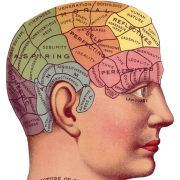
Image: A vintage and somewhat unscientific map of mental functions. But how fine grained are these adaptations?

– by Thomas J. H. Morgan

From the outside, the brain is a medium sized, pinkish-grey blob. At the microscopic level, it’s a densely woven mesh of countless neurons. In between these two extremes is the brain’s functional structure – the mind, or more concretely, how those neurons are wired together to solve problems and manage behavior.

A popular metaphor for the mind is the Swiss-army knife. Like the brain, the Swiss-army knife has a large-scale external appearance (red, cigar-shaped, with silver rotating appendages) and a microscopic constitution (atoms and molecules). However, it also has a functional mid-level structure, being composed of subunits that solve particular problems – opening bottles, filing nails, driving screws, scaling fish, cutting wires, and so on.

As useful as it is, the Swiss-army knife has limitations. Screwdrivers and fish scalers aren’t much use without screws or a means to catch fish. Someone heading out into the unknown might instead prefer a kit of fewer but more widely applicable tools. Say, an axe and a crowbar. Rather being designed for specific problems, these items can be put to work in many contexts and so can handle unforeseen situations more successfully.So, what does the mind look like – a bespoke Swiss-army knife with many task-specific solutions, or an adaptable survival kit of just a few broadly applicable tools? This is the question we set out to answer. We recruited groups of participants and had them collectively complete a task. The task we chose was mate-choice copying – participants evaluated how attractive they found photos of other people, and then they saw what other participants thought and could alter their decision.

Mate-choice copying is particularly relevant to this question as it sits at the interface of two fields – evolutionary psychology, which has collected lots of data on human mate choice, and cultural evolution, which has extensively studied copying and social influence. In addition, while some prior work on mate choice copying has suggested it is managed by a mental adaptation evolved specifically for this task, other work has argued the mental system is broader and handles decision making and learning more generally.

Prior work led by Dr. Sally Street had already found that humans were equally influenced by what others thought about the attractiveness of human faces, human hands and abstract art, but we wanted to dig into the details. Studies of copying across many other contexts have documented that humans are influenced by majorities (“conformity”) as well as by successful individuals (“prestige”). We tested whether these same patterns occurred in mate-choice copying. In addition, we collected data from both men and women to see if there were gender differences in copying. Our reasoning was that the more mate-choice copying differed between genders or from copying in other contexts then the more likely it was underpinned by a mate-choice specific adaptation.

Our results showed the opposite. Participants were influenced by each other’s decisions, and analysis of the patterns in this copying found strong evidence of both conformity and prestige. In addition, there was strong evidence that both men and women copied in the same way. We thus concluded that rather than a bespoke system, mate choice-copying is underpinned by the same copying mechanisms that are active in other contexts – it’s a crowbar, not a Swiss-army knife.

There are two important points though. First, although we suggest the mind is made of general-purpose systems, these systems are still adaptations – they are just adaptations for broad classes of problems, as opposed to specific tasks. Second, even broadly applicable systems can be flexibly tuned to meet particular needs. For instance, copying is known to be adjusted according to factors like confidence and risk. Through factors like these, even broad ranging systems can be adaptively tuned for particular tasks, just like a crowbar can be applied with different amounts of force. Thus, the mind might have fewer solutions than the Swiss-army knife metaphor suggests, but its adaptive power comes from the flexible use of the tools at its disposal.

Read the original article: Foreman, M., & Morgan, T.J.H. (2024). Prestige, conformity and gender consistency support a broad-context mechanism underpinning mate-choice copying. Evolution and Human Behavior, 45(1), 58-65.