• Login
  • Join/Renew
  • ADAPT Program
HBES
  • Link to X
  • Link to Facebook
  • Link to Mail
  • Home
  • About HBES
  • Conference
  • Journal
  • Awards
  • Places to Study
  • News
  • Click to open the search input field Click to open the search input field Search
  • Menu Menu

How economic inequalities affect mating markets, and how they might shape culture

December 6, 2022/in Newsletter

– by Rob Brooks, Khandis Blake & Lutz Fromhage

Choosing a mate involves a vast number of considerations. Personalities, looks, kindness, and attentiveness all come into play. So do status, wealth and material resources because mating partnerships are – at least in part – economic arrangements.

A couple shares much of their time, labour, and wealth, often investing in their joint social mobility and in raising children. Wherever and whenever money and status matter in heterosexual mating decisions, it is far more common for women to partner upward (a pattern called hypergyny) than it is for men. Across cultures and eras, hypergyny is common but its opposite (hyperandry) is vanishingly rare.

If economic considerations influence mating decisions, then it seems reasonable to expect the distribution of wealth to have important effects on mating patterns. For example, gaps in average income or wealth between women and men will likely alter the number of suitable partners a person might encounter. When women have few means of their own, then a majority of men could provide at least some upward mobility to any one of a majority of women.

That’s an argument we have encountered in verbal form, but when we wanted to make the argument in our work on the mating market consequences of inequality, we found a surprising lack of modelling. Moreover, thinking about the effects of income inequality within the sexes was even more sparse. If economic conditions like gender- and income inequality affect mating prospects, then that’s one more reason for them to also affect individual well-being, happiness, and political attitudes. So, in a recent Evolution and Human Behaviour paper, we modelled how inequalities between women and men, and inequalities within the sexes, might influence fitness prospects under hypergyny.

The model

We created a population of individuals (a million of each sex), assigning them ‘wealth’ according to specified sex-dependent distributions. Their ‘status’ is their rank-order in wealth within their sex, so we can compare what happens under various wealth distributions. Individuals go through a series of one-to-one encounters with random unpaired members of the opposite sex. If, in an encounter, the two individuals’ preference rules are met, they form a pair and don’t participate in any further encounters. The result that interested us was how sex and status influenced the chances of an individual pairing up within 100 encounters.

The simplest preference rule – Choice Rule 1 – considered an encounter a match if the man’s wealth was the same as or greater than the woman’s. Some might find men’s lack of agency and women’s hard-edged preferences somewhat affronting, so we tried a few other rules. Rule 2 only allowed a match if the man’s wealth exceeded the women’s but by no more than a specified ‘cap’. Rule 3 added a second trait (which we imaginatively called ‘X’) that men cared about in that they only paired with a woman whose X exceeded their own. And Rule 4 gave women and men both preferences for wealth and ‘X’. Rules 2 to 4 made the results of our modelling a little less stark, as one might expect, but not fundamentally different, so our paper focuses really on the original preference rule 1.

Inequality between the sexes

If the wealth distribution for women doesn’t differ from that for men, the result is simple and easily anticipated. Men of above average wealth always find a match, the poorest never do, and the success of those in between depends on where they fit in terms of ranked wealth (i.e. ‘status’). In the same way, women of below average wealth always find a man who meets their preference and the wealthiest never do. The result is so obvious it probably doesn’t need modelling, and the intuition is common among evolutionary scientists, at least as far back as Trivers and Willard’s 1973 paper about adaptive offspring sex ratio adjustment.

Things get a bit more interesting when we introduce a small sex difference in mean wealth. If men average one standard deviation more wealth than women, the chance of mating improves dramatically for below-average status men and above-average status women (remember the above-average men and below-average women were already successful in pairing).

We modelled the effects of sex differences in mean wealth for up to four standard deviations in each direction, and showed that the more men’s wealth exceeded women’s, the more likely poorer men and wealthier women were to find a mate. When women’s wealth exceeded men’s on average, it was the above-average men and the below-average women whose mating prospects declined.

These results provide some insight into the mating market consequences of gender gaps. Those consequences might alter how people approach mating, gender relations, and even voting. For example, Incel (involuntary celibate) men, many of whom are young and below average income, blame narrowing gender gaps for undermining their marriage and mating prospects. They are infamous for their often violent, misogynistic rage, much of it directed at movements like feminism and laws that limit gender inequities.

Income inequality

Next we turned our attention to within-sex income inequality by altering the standard deviation of the distribution of wealth within each sex. We began by manipulating inequality in the same way for women and men simultaneously. Reducing inequality improved the pairing success of the two groups that struggle most finding a partner under hypergyny: the poorest men and wealthiest women. These results match with the intuition that – under hypergyny – inequality leaves a larger number of poor men unable to find a mate, and likewise that very wealthy women will be unable to find a partner whose income exceeds theirs.

An increase in inequality, however, did not hit the poorest men and wealthiest women as hard as it hit those men who were just below average in wealth and those women who were just a bit wealthier than average. If our modelling holds up in real mating markets, it would suggest that mating markets might respond to inequality in ways that entail more than merely comparisons between wealthy and poor.

That becomes even more true when we manipulate the inequality in one sex alone, while keeping it constant in the other. Those details are probably beyond a readable blog post, but the most intriguing finding is that a small shift in status can make a big difference between whether inequality suits or harms one’s mating interests..

Where to from here?

Evolutionary behavioural scientists have long understood that mating markets can have profound effects on a variety of behaviours. This enterprise has been most successful, to date, in the study of biased sex ratios and their flow-on effects. Nonetheless, economic inequalities are known to be associated with behaviours that are related to mating, as documented in Martin Daly and Margo Wilson’s extensive research on homicide rates. Indeed, our recent studies of self-sexualisation on social media, and the incidence of Incels posting on Twitter, drew to our attention the need to model how inequalities affect mating markets.

Our model shows that the effects of inequalities on mating interests are never as simple as favouring one sex at the expense of the other. It is our hope that our paper stimulates both theoretic and empirical exploration of how economic inequalities between and within the sexes shape mating markets and a variety of human behaviours.

Read the original paper here

Brooks, R.C., Blake, K., & Fromhage, L. (2022). Effects of gender inequality and wealth inequality on within-sex mating competition under hypergyny. Evolution and Human Behavior, 43(6), 501-509.

https://www.hbes.com/wp-content/uploads/2022/12/Harry_Meghan.jpeg 477 750 Pat Barclay https://www.hbes.com/wp-content/uploads/2019/07/HBES-banner-2019.png Pat Barclay2022-12-06 15:21:542022-12-06 15:21:54How economic inequalities affect mating markets, and how they might shape culture

Across 42 countries, how did the unique social circumstances of COVID-19 affect fundamental social motives?

December 5, 2022/in Newsletter

– by Cari Pick

For many people worldwide, the COVID-19 pandemic created an evolutionarily novel set of pressures: extended social isolation as 57% of the world’s population was confined to full or partial lockdown measures. How would these pressures reshape our social lives? Did the social distancing affect our fundamental social motives: the suites of cognitive, affective, and behavioral tools aimed at addressing the adaptive social challenges of protecting ourselves from dangerous others, avoiding contagious disease, finding and maintaining cooperative partners (affiliation), gaining and keeping status, finding mates, retaining those mates, and caring for kin? It did…and importantly did not.

To find this out, our international team of 66 researchers measured a total of 6,917 people’s fundamental social motives in 29 countries during the first year of the pandemic and compared this to data we had collected measuring 8,998 people’s motives in 32 countries before the pandemic began. We found that, as expected, people on average became more concerned about avoiding disease during the pandemic than before.

There were also several other smaller but sensible shifts in people’s motives. Unsurprisingly, we saw that people with children became even more concerned about caring for them during the pandemic: a strong drive to protect one’s offspring during a dangerous time. We may have also expected that the isolation—the inability to meet potential new romantic partners, spend time with friends, or interact with colleagues—would lead people’s mate seeking, affiliation, and status seeking motives to reactively increase and boost the pursuit of these goals. On the contrary, as people’s disease avoidance increased, several of the motives most likely to bring them near potentially contagious individuals—when finding mates, maintaining friendships, or gaining status—all decreased.

But in an important way, we saw no difference before versus during the COVID-19 pandemic. Before the pandemic began, we consistently saw across countries (and across several methodologies) that people were more motivated to care for their families and long-term romantic partners than to find new mates. And again during the pandemic, all around the world, people on average remained more motivated to care for family than to seek mates—and more motivated to care for family than to avoid disease!

Before the pandemic, people who were more concerned with caring for family also tended to be happier, with higher levels of well-being and lower levels of depression and anxiety, whereas people who were more concerned with finding mates tended be less happy, more depressed, and more anxious. On the other hand, both before and during the pandemic, people with higher disease avoidance motive tended to be less happy. Would the heightened disease avoidance concern during the pandemic smother a relationship between happiness and people’s kin care and mate seeking motives? Would happiness still be positively associated with family care for people confined to their homes, many now living in increased enforced daily contact with immediate family members? Yes, it seems that family still matters: During the pandemic, people who were more concerned with caring for family again tended to be happier, and those more concerned with finding mates again tended to be less happy.

Despite a large shift in disease avoidance motive, most of the other significant fundamental social motive shifts we saw during the pandemic were relatively small, and the overarching pattern of the preeminence of family-care motives remained. Yet as many people reinvented their daily lives, avoiding going in person to work, school, and even the grocery store, one could have expected to see even bigger shifts in their fundamental social motives. Why might that not have been the case? Perhaps the marvels of modern technology let many people remain connected enough to avoid the worst effects of isolation through video calls, social media, and even modern dating apps. Perhaps people’s fundamental social motives are resilient to certain shifts in external circumstances, temporarily spiking or dropping as a situation requires and then settling back to something like a baseline level. Or perhaps our samples did not include people who faced some of the worst effects of the pandemic. One thing that does seem clear, however, is that humans rely upon family to overcome many challenges, and even in the face of a global pandemic, family still matters most.

Read the paper: Family Still Matters, or read more about the published data which are freely available for use in your own work.

Pick, C., et al. (66 co-authors). (2022). Family still matters: human social motivation across 42 countries during a global pandemic. Evolution and Human Behavior, 43(6), 527-535.

https://www.hbes.com/wp-content/uploads/2022/12/COVID-isolation.jpg 651 976 Pat Barclay https://www.hbes.com/wp-content/uploads/2019/07/HBES-banner-2019.png Pat Barclay2022-12-05 09:56:342022-12-06 15:27:09Across 42 countries, how did the unique social circumstances of COVID-19 affect fundamental social motives?

Do people regard ethnic outgroups as more pathogen-wise dangerous to interact with?

November 24, 2022/in Newsletter

– by Lei Fan

Most people would rather touch flowers than wet rags, eat fresh foods than rotten ones, and drink water from one’s own bottle than from a stranger’s. These preferences seem to have straightforward functions: they protect us from the microbes that cause infectious diseases. Researchers suggest that we humans – like many other animals – have evolved some ability to detect and avoid pathogens – that is, we have a behavioral immune system.

A popular hypothesis in the behavioral immune system literature suggests that negative attitudes toward people with different skin color, ethnical origins, or religions – that is, outgroup members – serve pathogen-neutralizing functions. The line of thinking goes as follows: different groups live in different areas, and those areas have different pathogens. One group carries pathogens that they have acquired some immunity against, but that another group has not acquired immunity against. Hence, the average outgroup individual is more likely to carry novel pathogens than the average ingroup individual is, which makes these intergroup interactions pose higher infectious disease threats. Historical events illustrate the most extreme disease consequences of such interactions. For example, the introduction of measles and smallpox from Europeans to Native Americans led to a 57% reduction in effective population size (Lindo et al., 2016). Consistent with these ideas, many studies have reported that intergroup biases are stronger in areas with higher pathogen threats (e.g., Letendre et al., 2010, O’Shea et al., 2019), after research participants have been primed to feel vulnerable to disease (e.g., Faulkner et al., 2004, Klavina et al., 2011), and among individuals who report greater motivations to avoid infection (e.g., Aarøe et al., 2017; Clifford et al., 2022). However, other findings haven’t been straightforwardly consistent with the idea that outgroups are, in general, interpreted as pathogen threats (e.g., Ji et al., 2019, Karinen et al., 2019, van Leeuwen and Petersen, 2018).

Inspired by the test that van Leeuwen and Petersen (2018) conducted, we aimed to test a foundational aspect of the hypothesis that the behavioral immune system interprets outgroup members as more of a pathogen threat than ingroup members: that people should feel less comfortable with microbe-sharing contact with ethnic outgroup targets than ethnic ingroup targets.

This paper was a registered report – a format in which our hypotheses, methods, and analysis plan were peer-reviewed before we collected the data and knew the study’s outcomes. We recruited participants who were either White UK residents or East-Asian Chinese residents. Each participant saw one of 40 faces, which were either East Asian or White. Some participants saw a face that was unmodified; others saw a face modified to have an infection symptom (shingles); and others saw a face modified to be wearing a facemask. Participants completed 7 items in which they reported how comfortable they would be with indirect contacts with the target, such as using drinking from the same bottle as the target, and sitting next to the target while the target was coughing and sneezing.

Our results revealed that contact comfort was lower for targets modified to have symptoms of infection relative to targets that didn’t have these symptoms. And people who scored higher on an instrument assessing the tendency to be disgusted by things that contain pathogens (e.g., dog feces) reported lower contact comfort. So, we had some evidence that the contact comfort items worked as intended. But were people less comfortable with contact with outgroup members than ingroup members? No – there was no interaction between participant ethnicity and target ethnicity. The presence or absence of infection cues (or a facemask) did not change this (lack of) effect.

Hence, do we interpret ethnic (outgroup) membership as diagnostic of infectious disease risk? Results of the current study suggest that no, we do not. But other results from previous studies seem still providing a lot of evidence supporting the idea that the behavioral immune system relates to intergroup attitudes in some way, such as those mentioned earlier. Thus, the main take-home message from our paper is, the story behind these mechanisms is probably way more complex than group membership being treated as solely indicative of pathogen threat.

https://www.hbes.com/wp-content/uploads/2022/11/Lei-Fan-image-1.jpg 853 1280 Pat Barclay https://www.hbes.com/wp-content/uploads/2019/07/HBES-banner-2019.png Pat Barclay2022-11-24 13:59:592022-11-24 13:59:59Do people regard ethnic outgroups as more pathogen-wise dangerous to interact with?

Are People Who Perceive Themselves As Attractive Prone to Behave Selfishly?

November 24, 2022/in Newsletter

– by Xijing Wang

Although there is a common saying that “Beauty is in the eye of the beholder”, good-looking people still attract the public’s attention easily and are more favored by people across different social domains. For instance, it is not surprising that in the dating market, physical attractiveness is advantageous for both men and women. Good-looking people are more likely to receive attention and popularity, are helped more by others, enjoy better physical and mental health, are more likely to receive job opportunities and are believed to be fit for desirable jobs, earn more money, obtain higher social status, are favored by their teachers in educational settings, and are even supported in the context of criminal and civil proceeding. In fact, a consensus has largely been reached on a phenomenon known as “what is beautiful is good”, which refers to perceivers attributing various positive traits to good-looking individuals.

Despite these positive perceptions, relatively little research has been devoted to examining how attractive individuals actually behave. Would physically attractive people really act in a nice and kind manner as perceived and expected by other people? The theories of social psychology and evolutionary psychology make divergent predictions in this regard. From a social psychological perspective, attractive individuals should internalize the positive stereotypes from perceivers and eventually develop positive behaviors as expected (i.e., the self-fulfilling nature of “what is beautiful is good” and self-interested behavior). In contrast, the evolutionary perspective of attractiveness predicts that attractive individuals would act selfishly because of a sense of entitlement derived from their evolutionary advantage and bargaining power (i.e., the evolutionary perspective of attractiveness and self-interested behavior).

Therefore, the interesting question that remains unknown is whether physical attractiveness can predict self-interested behavior, and if so, in which direction? Recent research published in Evolution and Human Behavior, led by Dr. TENG Fei from South China Normal University and Dr. WANG Xijing from the City University of Hong Kong, has answered this question.

Across a series of five studies with a total of 1,303 participants from the United States and China, participants’ self-perceived attractiveness was measured or manipulated. Then, their self-interested behavioral intention or actual behavior was assessed. In addition, their psychological entitlement was measured or manipulated. Study 1 showed that self-perceived attractiveness was positively associated with self-interested behavioral tendencies and psychological entitlement. Moreover, psychological entitlement could account for the relationship between self-perceived attractiveness and people’s inclination to act in a self-interested manner. Study 2 replicated the findings of Study 1 with Chinese undergraduate students by assessing the participants’ actual self-interested behavior. As such, those who perceived themselves as more attractive allocated themselves more resources; their sense of entitlement accounted for this effect. Study 3 conceptually replicated the findings of Studies 1 and 2 that self-perceived attractiveness could predict self-interested behavioral intention. In addition, it further demonstrated the role of psychological entitlement in this process at a causal level. As such, heightening psychological entitlement could make participants with low self-perceived attractiveness show increased self-interested behavioral intention. The final two studies provided further causal evidence. Participants whose self-perceived attractiveness was temporarily heightened by recalling an incident in which they thought they were physically attractive (Study 4) or by comparing themselves to unattractive others (Study 5) showed increased self-interested behavioral intention and actual behavior in an economic game.

Therefore, theoretically, these findings support the prediction made by the evolutionary perspective on attractiveness: attractiveness, as a biological marker for health, strength, fitness, and fertility, indicates evolutionary advantages and is naturally favored by people across different domains (e.g., as allies, leaders, romantic partners, offspring). Due to their greater bargaining power, attractive individuals may have learned that they may receive more than others and showed a higher level of psychological entitlement. This could subsequently induce them to act in a self-interested manner.

This research also has practical implications: self-perceived attractiveness that was even temporarily induced could amplify self-interested behavior. Prior research has documented that others often treat good-looking individuals favorably. This research suggests that instead of showing reciprocity by treating others nicely, attractive people tend to take those treatments for granted and believe that they are entitled to more. Since self-interested behavior often threatens collective benefits and cooperation vital to positive functioning in human societies, self-interested behaviour should be discouraged. When it comes to attractive individuals, avoiding biases (e.g., not perceiving and treating them in a positively biased manner) could be a (fundamental) solution to reducing self-interested behavior among them.

https://www.hbes.com/wp-content/uploads/2022/11/Wang-blog-picture.png 850 1280 Pat Barclay https://www.hbes.com/wp-content/uploads/2019/07/HBES-banner-2019.png Pat Barclay2022-11-24 13:45:312022-11-24 13:45:31Are People Who Perceive Themselves As Attractive Prone to Behave Selfishly?
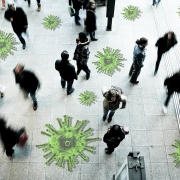
crowd with pathogens in between people

Does pathogen avoidance lead to prejudice based solely on group membership?

October 28, 2022/in Newsletter

by Anastasia Makhanova

The COVID-19 pandemic has profoundly affected people’s psychology and behavior. At the grocery store, for example, people might avoid busy aisles. If a stranger is coughing, people may preemptively step away and walk in another direction. People may altogether avoid grocery stores—and the store’s other patrons—and order grocery delivery to their door. Although the pandemic has kicked some of these behaviors into overdrive, the motivation to avoid pathogens is not new. Indeed, pathogens have been a recurrent and pernicious threat throughout the evolutionary past and that pressure shaped adaptive strategies that function to minimize pathogen threat.

Some strategies, as in the examples above, involve vigilance to environmental cues—including other people—that are associated with increased likelihood of contagion. People can detect signs of illness in faces, smells, and posture. Heightened pathogen avoidance motives, however, also lead to a more conservative threshold about whether a cue is linked to pathogen threat. That is, people who typically are more (vs. less) vigilant to pathogens and people who are in the moment reminded about the dangers of pathogens tend to avoid others who belong to groups only stereotypically associated with illness. Indeed, pathogen concern has been linked to age-based prejudice, weight-based prejudice, and—most consistently—people who belong to a different ethnic or racial group.

Why does heightened pathogen avoidance lead to greater prejudice against people from ethnic and racial outgroups? On the one hand, myriad historic accounts detail terrible consequences of pathogen transmission between two groups during initial contact, such as when the smallpox virus, brought over by the Spaniards, decimated the Aztec population. On the other hand, in the evolutionary past, contact with other racial and ethnic groups was likely so infrequent that there would have been insufficient pressure for the development of a specific adaptation to avoid outgroups in response to an illness outbreak. Nevertheless, it is plausible that—when pathogen avoidance is heightened—people would become especially wary of outgroups.

Although numerous studies show that heightened pathogen avoidance motives are linked to bias against people from racial and ethnic outgroups, it is unclear whether this pattern of results is specifically due to group membership (i.e., this person is an outgroup member and not an ingroup member) or another appraisal of the person. We conducted a study to identify the unique influence of group membership on social avoidance under the pressure of pathogen threat.

To isolate group membership, we relied on a method from social psychology called the Minimal Group Paradigm developed by Henri Tajfel and his colleagues in the early 1970s. This paradigm involves creating novel, arbitrary groups called minimal groups that are not connected people’s existing social identities. When people are placed into one of two minimal groups, they immediately develop a favorable attitude toward that group and a relatively unfavorable attitude about the outgroup. We hypothesized that, if heightened pathogen avoidance is associated with prejudice against racial and ethnic outgroups because of their outgroup status, then heightened pathogen avoidance would be associated with greater prejudice against a minimal outgroup.

First, to create minimal groups, we asked participants to complete a personality questionnaire. Without scoring their answers, we told participants that they were either “Green” or “Orange” personality type at random. Next, we used an experimental manipulation to heighten pathogen avoidance for some of our participants under the guise of being interested in how personality affected perceptions of photographs. Participants were randomly assigned to one of three groups: pathogen threat, non-pathogen threat, and control. Each watched a slideshow of images depicting people who were sick, anxiety-inducing scenes such as tornadoes, or furniture, respectively. Then, we asked participants to tell us about their initial intuitions about whether they would like other people who were part of their minimal ingroup (i.e., Orange if the participant was assigned to Orange) and other people who were part of their minimal outgroup (i.e., Green if the participant was assigned to Orange). Given the classic findings that people tend to like their ingroup and dislike their outgroup, we hypothesized that people in the pathogen threat condition (relative to those in the other two conditions) would show a greater divide: they would rate the minimal ingroup even more positively and the minimal outgroup even more negatively.

Unfortunately, we did not find support for our hypothesis. There were no differences between the three conditions in terms of the relative preference for the minimal ingroup versus the minimal outgroup. We did, however, replicate the classic findings: everyone evaluated the minimal ingroup more positively than the minimal outgroup.

We conducted exploratory analyses to examine whether people who were predisposed to heightened pathogen avoidance (i.e., people who reported higher trait levels of pathogen disgust) reacted differently to the experimental manipulation than those who were low in pathogen avoidance. Although the pattern of results in those analyses was largely inconclusive, we did find that people predisposed to heightened pathogen avoidance reacted more strongly to the Minimal Group Paradigm as a whole. That is, the difference between the ingroup and outgroup evaluations was greater for people high in pathogen disgust compared to those low in pathogen disgust. This latter finding, although exploratory, does suggest that some aspects of people’s pathogen avoidance psychology may be specifically attuned to information about group boundaries.

Generally, our findings show that, when people are faced with a situation that increases their concern about pathogen threat, they are unlikely to be reacting only to whether someone is an ingroup or outgroup member. In such situations, other appraisals are likely driving the observed biases against racial and ethnic outgroups.

https://www.hbes.com/wp-content/uploads/2022/10/pathogen-avoidance.jpg 637 960 Pat Barclay https://www.hbes.com/wp-content/uploads/2019/07/HBES-banner-2019.png Pat Barclay2022-10-28 14:49:312022-10-28 14:52:04Does pathogen avoidance lead to prejudice based solely on group membership?

TT Assistant Professor in Cognitive Development Job – UCSB

September 29, 2022/in Announcements, Newsletter

The Department of Psychological and Brain Sciences at the University of California, Santa Barbara invites applications for a tenure-track faculty position at the level of Assistant Professor in the area of Cognitive Development.  For full details about the recruitment and to apply, visit https://recruit.ap.ucsb.edu/JPF02297. Applications received by November 1, 2022 will be given priority consideration. The Department is especially interested in candidates who can contribute to the diversity and excellence of the academic community through research, teaching, and service as appropriate to the position. The University of California is an Equal Opportunity/Affirmative Action Employer. All qualified applicants will receive consideration for employment without regard to race, color, religion, sex, sexual orientation, gender identity, national origin, disability status, protected veteran status, or any other characteristic protected by law.

https://www.hbes.com/wp-content/uploads/2022/09/2-color-seal.gif 1560 2340 jaimie.krems https://www.hbes.com/wp-content/uploads/2019/07/HBES-banner-2019.png jaimie.krems2022-09-29 15:01:562022-09-29 15:01:56TT Assistant Professor in Cognitive Development Job – UCSB

Job. Opening: Chair of Psychology, ASU

September 25, 2022/in Announcements, Newsletter

Arizona State University, a leading public research university that is rated first in the U.S. for innovation, seeks a dynamic, forward-looking chair for the Department of Psychology, with a concurrent appointment as a tenured Professor. The anticipated start date for this position is July 1, 2023.

See the full ad and apply here!

https://www.hbes.com/wp-content/uploads/2022/09/arizona_state_u_2.gif 234 400 jaimie.krems https://www.hbes.com/wp-content/uploads/2019/07/HBES-banner-2019.png jaimie.krems2022-09-25 14:53:252022-09-25 14:53:25Job. Opening: Chair of Psychology, ASU

Director (Full Professor) Position at the School of Human Evolution and Social Change (SHESC)

September 25, 2022/in Announcements, Newsletter

The College of Liberal Arts and Sciences at Arizona State University (ASU) invites applications for the position of Director of the School of Human Evolution and Social Change (SHESC) with a concurrent appointment as a tenured Full Professor. 

SHESC Director Job ad!

Apply here!

https://www.hbes.com/wp-content/uploads/2022/09/5QTqo7X_400x400.jpeg 399 399 jaimie.krems https://www.hbes.com/wp-content/uploads/2019/07/HBES-banner-2019.png jaimie.krems2022-09-25 14:50:422022-09-25 14:50:42Director (Full Professor) Position at the School of Human Evolution and Social Change (SHESC)

Two tenure-track positions in Developmental Psychology at Oklahoma State University

September 15, 2022/in Announcements, Newsletter

DEPARTMENT OF PSYCHOLOGY, OKLAHOMA STATE UNIVERSITY is seeking outstanding scientists to fill two full-time, Assistant Professor, tenure track positions in the area of Developmental Psychology beginning August 2023. The Department is seeking one candidate for each of the following areas of specialization: (1) cognitive development with a focus on infancy or childhood; and (2) inequality as related to developmental psychology, broadly defined (e.g., economic disparities, social inequalities, psychology of fairness or morality). Candidates are expected to have a strong background in and dedication to scholarly activity, and to interact well with colleagues and students. They are expected to establish a vigorous, high-quality research program, to be or have potential to be internationally-recognized in their field, and to attract and mentor high-quality graduate students. We welcome applications from candidates with backgrounds in developmental psychology or closely related fields. Scholars with marginalized identities, including women, gender, and sexual minorities, racial and ethnic minorities, rural, first-generation, immigrant or non-U.S. scholars, scholars who experienced economic disadvantage, scholars with disabilities, and any other scholars underrepresented in psychology, are encouraged to apply.

The Department includes a strong Developmental Science cohort with expertise in cognitive development, social and emotional development, neurobiological development, and pediatric psychology. Candidates would also have access to the OSU Brain Initiative, https://tulsa.okstate.edu/braininitiative, a growing interdisciplinary neuroscience collaboration at OSU that includes fMRI research capabilities. The Psychology Department has a shared laboratory space with facilities and equipment to support faculty exploring genetic and endocrine contributions to behavior. Competitive salary and start-up funds are available.

Candidates will be expected to serve as a research mentor for doctoral students, to supervise undergraduate research, and to provide quality classroom instruction for both graduate and undergraduate courses. Typical teaching load is two courses per semester. A successful faculty candidate should be willing to teach from a multicultural perspective and should be willing to mentor ethnically, racially, and socioeconomically underrepresented students. Diversity is a core value of the Department of Psychology and we are committed to the recruitment, retention, and success of diverse students. See: https://diversity.okstate.edu

The Department has 25 full-time faculty and offers Ph.D. degrees in experimental psychology and clinical psychology. The experimental program has concentrations in Developmental, Comparative-Neurobiological, Cognitive, and Social-Personality. The clinical program, continuously APA-accredited since 1971, is based on the clinical science model of training and is a member of the Academy of Psychological Clinical Science. The Department offers training to a diverse graduate and undergraduate student body (30% minority enrollment) of approximately 60 doctoral students and over 1000 undergraduate majors. The Department has faculty in Tulsa who teach and do research on the OSU-Tulsa campus. Applicants are encouraged to visit the Department website at http://psychology.okstate.edu.

Oklahoma State University, home of the Cowboys, is a top-ranked public land-grant research university, located in Stillwater, OK, approximately 70 miles from the major metropolitan areas of Oklahoma City and Tulsa. Among the most geographically diverse states, Oklahoma has 11 distinct ecological regions in its borders—more per square mile than in any other state – and is

home to fifty-one state parks, six national parks or protected regions, two national protected forests or grasslands, and a network of wildlife preserves and conservation areas. There are currently thirty-nine recognized tribes with headquarters in Oklahoma and twenty-five Native American languages are still spoken here. See https://www.okhistory.org/research/tribalnations for more information. Stillwater is a smaller, welcoming city centered around the University, with approximately 50,000 full-time residents. Stillwater public schools were recently selected as one of the “100 Best Public School Systems in America,” and the city has excellent affordable housing. Faculty in the department also live in Oklahoma City and Tulsa.

For full consideration, application materials must be received by October 1, 2022. However, applications will be accepted until the position is filled. Applications should include a cover letter, research and teaching statements, vita, reprints/preprints of representative research, and summary of course evaluations/evidence of teaching excellence. The application portfolio, compiled as a single PDF file, should be uploaded to the application portal at http://apply.interfolio.com/113503. In addition, candidates should arrange for three letters of recommendation to be sent via email to Dr. Jennifer Byrd-Craven, Chair, Developmental Psychology Search Committee at psychologysearch@okstate.edu. Questions about the position should be directed to Dr. Byrd-Craven.

Oklahoma State University, as an equal opportunity employer, complies with all applicable federal and state laws regarding non-discrimination and affirmative action. Oklahoma State University is committed to a policy of equal opportunity for all individuals and does not discriminate based on race, religion, age, sex, color, national origin, marital status, sexual orientation, gender identity/expression, disability, or veteran status with regard to employment, educational programs and activities, and/or admissions. For more information, visit https:///eeo.okstate.edu.

https://www.hbes.com/wp-content/uploads/2022/09/6113eb635cd7a24519aec2d9_OSU.jpeg 1162 1162 jaimie.krems https://www.hbes.com/wp-content/uploads/2019/07/HBES-banner-2019.png jaimie.krems2022-09-15 12:08:122022-09-15 12:08:12Two tenure-track positions in Developmental Psychology at Oklahoma State University

Evolutionary Anthropology Postdoc Position

September 8, 2022/in Announcements, Newsletter

The University of Missouri Department of Anthropology seeks a scientific anthropologist specializing in human-environment dynamics, including human evolution and behavior for a 2-year postdoctoral position. The position is sponsored by the University of Missouri’s Preparing Future Faculty—Faculty Diversity (PFFFD) Postdoctoral Program, which is designed to prepare scholars for tenure-track faculty positions at the University of Missouri and elsewhere. The stipend is $60,000 per year plus benefits.

More information about the PFFFD program is available at https://gradschool.missouri.edu/postdoctoral-education/preparing-future-faculty-postdoctoral-program-for-faculty-diversity/. The application deadline is September 30, 2022. The ideal candidate will complement our integrative study of Human Adaptation, Ecology, and Evolution. The area of specialization is open and can be, but is not limited to, cooperation and conflict, epidemiology, cultural continuity and variation through time, evolution of culture and intelligence, human interactions with plants and animals, life history and child development, religion, gender relationships, social structure and inequity, and hominid evolution. Research approaches can include but are not limited to demography, ecological and environmental anthropology, ethnobiology, archaeometry, human behavioral ecology, cognitive archaeology, genetics, human variation, and biomedical anthropology. MU’s Anthropology Department has long been recognized as a leading anthropology program among departments with a focus on the scientific study of relationships among culture, behavior, health, human biology and evolution, both throughout the present world and through prehistory. We have an internationally recognized program in these areas, and we seek a strong scholar to build on our strengths.

Contact: Rob Walker – walkerro@missouri.edu

https://www.hbes.com/wp-content/uploads/2022/09/MO003-ipad.webp 650 975 jaimie.krems https://www.hbes.com/wp-content/uploads/2019/07/HBES-banner-2019.png jaimie.krems2022-09-08 12:34:142022-09-08 12:34:14Evolutionary Anthropology Postdoc Position
Page 17 of 26«‹1516171819›»
Search Search

Categories

  • Admin (5)
  • AltAc (1)
  • Announcements (150)
  • Anthropology (48)
  • Awards (9)
  • Behavioral Ecology (18)
  • Biology (24)
  • Call for Papers (28)
  • Conferences (44)
  • Courses (4)
  • Economics (6)
  • Events (21)
  • Funding (11)
  • Jobs (89)
  • Journal (3)
  • Linguistics (3)
  • Newsletter (257)
  • PhD Students (53)
  • Postdocs (47)
  • Psychology (84)
  • Uncategorized (22)

Contacts

Membership
Journal Subscription
Contact Form

Communications Officer
Contact Form

Grant Proposals
Submission Form

Grievance Committee
Contact Form

Website
Places to Study
Contact Form

Donate to HBES

Donate Here
Member Login
Not a member? Join HBES
© HBES Copyright.
  • Link to X
  • Link to Facebook
  • Link to Mail
  • Home
  • About HBES
  • Conference
  • Journal
  • Awards
  • Places to Study
  • News
Scroll to top Scroll to top Scroll to top