• Login
  • Join/Renew
  • ADAPT Program
HBES
  • Link to X
  • Link to Facebook
  • Link to Mail
  • Home
  • About HBES
  • Conference
  • Journal
  • Awards
  • Places to Study
  • News
  • Click to open the search input field Click to open the search input field Search
  • Menu Menu

Paternal investment and economic inequality predict cross-cultural variation in male choice

October 25, 2025/in Newsletter

— by Jun-Hong Kim

Over 95% of placental mammals are polygynous, with females bearing sole responsibility for rearing offspring. This stems from the reproductive characteristics of placental mammals. Female placental mammals are the default egg producers and are responsible for pregnancy and lactation. In other words, the default reproductive costs borne by female placental mammals are significantly greater than those of males. Consequently, female placental mammals, who invest substantial resources in reproduction, are choosier in mating than males. Males, meanwhile, strive to avoid missing reproductive opportunities and devote themselves to status competition to secure females.

However, human mating patterns appear to be the exact opposite of this placental mammalian norm. Human males are just as selective as females when choosing mates. Humans are one of the very few placental mammal species in which mutual choice occurs. Nonetheless, some societies permit polygamy. Even in those societies, though, polygamy is far removed from the extreme polygamy seen in some placental mammals (e.g. one male – multifemale polygyny in gorillas). Only a few upper-class men have multiple wives, while most men are in monogamous relationships or remain bachelors.

The most plausible explanation for this is that the cost of reproduction borne by human males is as significant as that borne by females. If one sex incurs higher reproductive costs, that sex will be choosier and more discriminating. Traditionally, female reproductive costs of egg production, gestation, and lactation have given weight to female choices. The additional costs borne by human males are 1) paternal investment and 2) resources, such as food, land, money and cattle, which can be translated into fitness. These costs increased as male contributions grew throughout later human evolutionary history (i.e. from 2.5 million years ago to the present). Sexual dimorphism in body size decreased, and male contributions to childcare also increased once strategic hunting began after the emergence of the genus Homo. Particularly after the advent of agriculture, men controlled farmland and livestock, making the resources they owned even more crucial.

This study sought to explore the factors determining human mutual choice. The conditions favoring mutual mate choice—paternal investment and earning potential—vary across countries and groups. Other factors that likely influence the direction and strength of mate choice include the operational sex ratio (OSR), which is the sex ratio of males to females present in the mating market at any given time, and population density, or the rate at which mate encounter each other. These factors serve as predictor variables in a multivariate regression, with the size of the cosmetic industry as the outcome variable, which signifies the degree of male choice. When there is marked variation in paternal investment and resources, I expect women to compete for potential good providers and wealthy males.

Across all statistical models, the economic inequality (i.e. resource variation) and paternal investment variables were the dominant predictors of the size of the cosmetics industry. OSR and population density were not significantly associated with the size of the cosmetics industry, which is contrary to expectations. In numerical terms, each hour increase in paternal investment corresponds to a $2.17 increase in per capita spending on cosmetics. Also, each increase in the income inequality index and the social mobility index corresponds to a $0.29 and $0.36 increase in per capita spending on cosmetics, respectively. Typically, paternal investment is a stronger predictor of the size of the cosmetics industry than the two economic inequality variables. This fits with the expectation that male resource variation (i.e. resource earning potential and paternal investment) would generate selection for male choice.

To check for independence, the clustering patterns were examined in two-dimensional graphs. Most statistical tests used in cross-cultural analyses assume statistical independence of data points; however, countries, cultures, and languages are not independent because they share histories and environments. If points cluster by location (e.g. cultures from one part of the world tend to have similar values) or relationship (e.g. related languages tend to cluster together), then the p-value and slope may not be valid. A simple first step is to plot the values on a map and determine whether they exhibit distinct spatial patterns. As shown in the three scatter plots, there are no clustering patterns.

In a recent study on sexy selfies (sexualized self-portrait photographs), which is also a proxy for male choice, Blake et al. (2018) found that the frequency of sexy selfies was correlated with two different indices of economic inequality. Also, dowry as a payment by the bride’s family and kin, which is a proxy for female-female competition, is highest in stratified and nonpolygynous societies. However, the influence of paternal investment on male choice was ignored.

In some species, females sometimes have exaggerated traits when males are responsible for parenting, or when females have large variations in reproductive success. Male choice is predicted for species with paternal investment. That is, the more effort a male puts into paternal investment, the more selective he will be in mate choice. However, this prediction has not been thoroughly tested.

https://www.hbes.com/wp-content/uploads/2020/04/sandy-millar-KhStXRVhfog-unsplash-scaled-e1585923511572.jpg 1312 2560 karthikpanchanathan https://www.hbes.com/wp-content/uploads/2019/07/HBES-banner-2019.png karthikpanchanathan2025-10-25 19:23:022025-10-25 19:23:02Paternal investment and economic inequality predict cross-cultural variation in male choice

Assistant Professor of Quantitative/Computational Psychology – Penn State

October 5, 2025/in Announcements, Newsletter, Uncategorized

The Department of Psychology at The Pennsylvania State University, University Park, PA, invites applications for a full-time Assistant Professor of Quantitative/Computational Psychology. The position is co-funded by Penn State’s Social Science Research Institute.

We seek candidates who use cutting-edge methods to advance our understanding of complex social, cognitive, and behavioral phenomena–specifically in the areas of Cognitive Psychology, Cognitive Neuroscience, or Industrial-Organizational psychology.

Follow this link for more information on the job and how to apply.

https://www.hbes.com/wp-content/uploads/2025/10/og-fallback-1293160405.jpg 627 1200 karthikpanchanathan https://www.hbes.com/wp-content/uploads/2019/07/HBES-banner-2019.png karthikpanchanathan2025-10-05 21:06:352025-10-05 21:07:25Assistant Professor of Quantitative/Computational Psychology – Penn State

Assistant Professor of Archaeology – Penn State

October 5, 2025/in Announcements, Newsletter

The Department of Anthropology at The Pennsylvania State University, University Park (https://anth.la.psu.edu/) invites applications for a full-time tenure-track position, at the rank of Assistant Professor.

We seek an outstanding archaeologist whose interests and skills are consistent with Penn State Anthropology’s integrative, scientific, quantitative, and empirical approach to studying human diversity. Specifically, we wish to recruit an archaeologist whose research record addresses the material manifestations of sociopolitical stratification, population transformation, human-environment interactions, and/or evolutionary variability. Methodological and geographical areas of expertise are open. We encourage applicants whose work can contribute toward collaborative scholarship within the department and across the university on initiatives focused on inequality, sustainability, human-environmental systems, and human health.

Follow this link for more information on the job and how to apply.

https://www.hbes.com/wp-content/uploads/2025/10/og-fallback-1293160405.jpg 627 1200 karthikpanchanathan https://www.hbes.com/wp-content/uploads/2019/07/HBES-banner-2019.png karthikpanchanathan2025-10-05 21:05:212025-10-05 21:05:21Assistant Professor of Archaeology – Penn State

Assistant Professor of Anthropology in Human Reproductive Ecology – Penn State

October 5, 2025/in Announcements, Newsletter

The Department of Anthropology (https://anth.la.psu.edu/) and the Social Science Research Institute (SSRI: https://ssri.psu.edu/) at The Pennsylvania State University, University Park invites applications for a full-time tenure-track position, at the rank of Assistant Professor.

We seek innovative social science researchers whose work focuses on the social and ecological determinants of reproductive health via field-based research using qualitative, quantitative, or mixed methods. Candidates may work on topics including, but not limited to, reproductive outcomes, such as fertility or parental investment in children (e.g. breastfeeding, child mortality, education); reproductive life stages, such as puberty, pregnancy, or menopause; and/or the social and ecological determinants of reproduction, such as environmental risk, social support, inequality, healthcare access, or communicable disease. Penn State Anthropology prides itself on its integrative research and is interested in hiring a scholar whose work is interdisciplinary and/or integrates across anthropology’s subfields. We welcome candidates with interdisciplinary interests or training in fields including, but not limited to, demography, human biology, epidemiology, ecology, evolutionary medicine, and/or public health. Study population is open and could include nationally representative samples, underrepresented groups, Indigenous communities, or small-scale populations, and regional focus could be in the U.S. or international.

Follow this link for more information on the job and how to apply.

https://www.hbes.com/wp-content/uploads/2025/10/og-fallback-1293160405.jpg 627 1200 karthikpanchanathan https://www.hbes.com/wp-content/uploads/2019/07/HBES-banner-2019.png karthikpanchanathan2025-10-05 20:47:482025-10-05 20:47:48Assistant Professor of Anthropology in Human Reproductive Ecology – Penn State

Ed Hagen awarded the Evolution in the Public Eye Award

September 27, 2025/in Newsletter, Uncategorized

HBES Members,

I am thrilled to announce that our HBES President, Ed Hagen, has just been awarded the inaugural Evolution in the Public Eye Award.

The EPE Award honors outstanding contributions to the public understanding of evolutionary perspectives on behavior. These contributions positively impact our perception and understanding of evolutionary science by communicating accurate, evidence-based information and/or exposing and countering misinformation and misleading claims. Through social media, community blogs, academic outreach, or other forms of science communication, honorees have helped foster more informed and nuanced public discourse about evolutionary science. This award recognizes those whose efforts strengthen the bridge between rigorous research and public understanding, helping ensure that evolutionary perspectives are represented accurately in broader societal discussions.

For more information including details on award ceremony and lecture on October 24, please follow this link. And if you are in the Ann Arbor, MI, area, consider attending the lecture!

https://www.hbes.com/wp-content/uploads/2025/09/hagen.png 680 504 karthikpanchanathan https://www.hbes.com/wp-content/uploads/2019/07/HBES-banner-2019.png karthikpanchanathan2025-09-27 14:56:472025-09-27 14:57:40Ed Hagen awarded the Evolution in the Public Eye Award

Submit your abstract for HBES 2026!

September 27, 2025/in Announcements, Newsletter

Dear HBES Community,

HBES 2026 will be held in Rabat, Morocco, at the University Mohammad VI Polytechnic (UM6P) from May 13-16, 2026. This will be a joint conference with the Cultural Evolution Society (CES).

Abstract submissions for the 2026 HBES conference are now open. Submissions will be accepted until November 16, 2025. You will be notified whether your abstract has been accepted in early January, 2026.

For more information about the meeting and to submit your abstract, please follow this link.

https://www.hbes.com/wp-content/uploads/2025/09/rabat.jpeg 581 1030 karthikpanchanathan https://www.hbes.com/wp-content/uploads/2019/07/HBES-banner-2019.png karthikpanchanathan2025-09-27 14:38:172025-09-27 14:38:54Submit your abstract for HBES 2026!

HBES 2025 Conference Survey Results

August 23, 2025/in Announcements, Newsletter

HBES Members,

I am writing in my capacity as Communications Officer to share with you survey results about our recent meeting in Atlantic City.

We had 127 responses, most of whom are faculty at various career stages, doctoral students, and postdocs. The vast majority of survey participants are from North America. Anthropologists and psychologists made up over 100 of the 127 responses, with psychology outnumbering anthropology three to one.

Here are statistical summaries of Likert scale questions, ranked from most satisfied to least satisfied

  • 83% (65/78) of participants agreed or strongly agreed that they felt free to express their views about scientific topics and questions at the 2025 meeting.
  • 82% (86/105) of participants are satisfied or extremely satisfied with the science in our journal, Evolution & Human Behavior.
  • 76% (80/105) of participants are satisfied or extremely satisfied with the degree to which HBES provides an environment in which people are free to express their ideas, opinions, or beliefs.
  • 76% (80/105) of participants are satisfied or extremely satisfied with the claim that HBES provides an environment in which people have an opportunity to excel regardless of their identity or background.
  • 70% (73/104) of participants are satisfied or extremely satisfied with the HBES e-newsletter. (As this is my first newsletter, I can take no credit, but would like to take a moment to thank my predecessor, Pat Barclay, for many years of service to HBES in this role.)
  • 70% (73/104) of participants are satisfied or extremely satisfied with HBES e-mail communications.
  • 65% (65/101) of participants would like to or are planning to attend HBES 2026 in Rabat, Morocco.
  • 62% (64/104) of participants are satisfied or extremely satisfied by the society’s overall impact.
  • 60% (62/102) of participants are satisfied or extremely satisfied with the Executive Council leadership over the last year.
  • 59% (61/103) of participants are satisfied or extremely satisfied with the disciplinary diversity of HBES.
  • 57% (58/102) of participants are satisfied or extremely satisfied by the society’s transparency of operations.
  • 54% (56/102) of participants are satisfied or extremely satisfied with the HBES website (33 participants are neither satisfied nor dissatisfied).
  • 40% (42/102) of participants are satisfied or extremely satisfied with HBES social media (another 42 participants are neither satisfied nor dissatisfied).
  • 26% (26/100) of participants are satisfied or extremely satisfied with the contractual agreement with Elsevier for our society journal, *Evolution & Human Behavior*.

In a large and diverse society, we can’t expect consensus on most issues. That said, most survey participants are broadly satisfied with the society.

There were two items in which a plurality of participants were neither satisfied nor dissatisfied: social media and the contractual agreement with Elsevier for Evolution & Human Behavior. (I’ll note that on no item was there a plurality, let alone a majority, who were dissatisfied or extremely dissatisfied.)

I cannot speak to any concerns you have about the contract with Elsevier, but as Communications Officer I am happy to relay any messages to the Executive Council. Social media, however, is within my purview as Communications Officer. Please send me concerns you have and suggestions on how we can improve this aspect of our society (same goes for the website, the newsletter, email communications. etc.).

Lastly, I’d like to highlight some of the qualitative opinions members shared with us. Rather than reproduce multiple responses verbatim, I’ll share with you my summaries.

  • A few participants expressed feelings of being an outsider, whether that’s because of their academic discipline (i.e. not being an anthropologist or psychologist) or their academic home (e.g. not being from a “respected lab”, a “California school”, or an “R-1”). This is unfortunate and certainly not something the society encourages. The EC is planning on adding events to the next annual meeting to try to address this issue.
  • A few participants complained that the society has become “too political”, with roughly equal numbers worrying it was too left-wing and too right-wing. The EC strives to maintain an environment in which HBES members are free to express themselves. This means that some members end up saying things that others deem “too political.” (I will also note that roughly the same number wrote lengthy responses commending the society for fostering an inclusive environment that allowed people to express their ideas. Furthermore, 80% of participants thought the society was doing a good job with freedom of expression and 83% felt they could express their ideas without a problem.)
  • A few participants felt that psychology is over-represented and anthropology is underrepresented. Among survey participants, psychologists did, in fact, outnumber anthropologists three to one. The EC remains committed to fostering disciplinary diversity. For example, plenary lectures tend to be balanced between psychology and anthropology. (I’ll also note that this is not a long-standing issue and that our society has very little representation outside these two disciplines—something we may want to work on in the future.)

Please reach out to the society if you feel your opinions are not being heard.

If you have specific suggestions on how we might improve our society, feel free to email me (communications@hbes.com) and I will relay the message to the Executive Council.

If you witnessed or experienced inappropriate behavior at conference , please contact the Grievance Committee (https://www.hbes.com/grievance/).

Sincerely,
Karthik Panchanthan

https://www.hbes.com/wp-content/uploads/2025/06/HBES-logo-for-portfolio-2.jpg 701 694 karthikpanchanathan https://www.hbes.com/wp-content/uploads/2019/07/HBES-banner-2019.png karthikpanchanathan2025-08-23 15:48:422025-08-23 15:48:42HBES 2025 Conference Survey Results

Studying the rarity of collective music-making in four indigenous societies

August 11, 2025/in Newsletter

– by Dor Shilton, Aniruddh D. Patel, Kim Hill, and Chris von Rueden

Many think that music evolved to promote or signal social cohesion. However, there are several societies in which group singing and dancing are extremely rare. Why is that the case, and what does it mean for our theories of music evolution? We examined four indigenous societies in which collective music-making is rare, assembling evidence concerning three non-mutually exclusive hypotheses:

  1. Collective action hypothesis: collective music-making is less likely where there is less collective action in general
  2. Musical expertise hypothesis: collective music-making is less likely if music is normally performed by people with special expertise or used to signal individual status
  3. Musical style hypothesis: collective music-making is less likely if the predominant musical styles are less suitable for coordinated singing and dancing

Our case studies

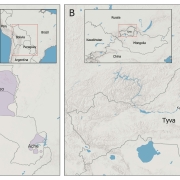
Using previous cross-cultural studies, we narrowed in on societies in South America and Siberia:

  1. the Tsimane of lowland Bolivia
  2. the Ache of eastern Paraguay
  3. the Ayoreo of Bolivia and Paraguay
  4. the Tuvans of the Russian Republic of Tyva

We aimed to create a detailed portrait of each society and its music-making practices using both ethnographic materials and first-hand reports. The latter were essential, since music-making practices are often not a major focus of ethnographies — especially in cultures in which music is not a central feature of collective behavior. Two of our co-authors had extensive relevant knowledge: Chris von Rueden, who worked with the Tsimane since 2005, and Kim Hill, who worked with the Ache from 1977 to 2020. We also corresponded with over a dozen anthropologists and other people familiar with these societies.

In the process of assembling these portraits, we became cognizant of the diverse histories underlying each culture and its musical customs. We did, however, find some convergent evidence for our hypotheses.

Collective action

This was the best supported hypothesis. In all the societies we examined, collective action related to subsistence was mostly limited to small groups and extended families, inter-tribal warfare was either non-existent or limited to small parties, and collective religious action was either suppressed significantly (limiting the scope of attendance) or was altogether absent.

Musical expertise

The influence of expertise was supported only in relation to religious activity. Among the Tsimane, Ayoreo, and Tuvans, the songs involved in religious rituals are potent and potentially dangerous, and require a level of expertise and knowledge.

Musical style

While we found evidence of solo-oriented musical styles (drone-overtone singing, ad-libbing), cases like the Tuvans made it clear that these do not prevent other singing styles from being used when circumstances encourage people to sing together. We therefore concluded that musical style is the consequent rather the antecedent of collective music-making prevalence.

Cultural loss

Cultural loss is a factor we haven’t initially considered, but which surfaced as a result of our study. Whether religious practices were suppressed by external forces (which is the case with the Tsimane, Ayoreo, and Tuvans), or were lost along with other cultural traits (as is the case with the Northern Ache), it certainly seemed to influence the overall prevalence of collective music-making.

Key Takeaway

Overall, our findings suggest that the scale and religiosity of collective action may be the most important explanatory factors for the prevalence of collective music-making, but other factors, like cultural loss and religious expertise, also play a role. While collective music can benefit social well-being, it is evidently not essential, as the four societies we studied sustained many key aspects of their social life with little to no collective music-making. One important takeaway from this study is that music evolution theories need to look more deeply into the relationship between music and religion, which could turn out to be a big part of the puzzle.

Finally, we invite readers to listen to some of the songs of the Tsimane, Ache, and Tuvans:

  1. A female Tsimane singer (link), from McDermott, J. H., Schultz, A. F., Undurraga, E. A., & Godoy, R. A. (2016). Indifference to dissonance in native Amazonians reveals cultural variation in music perception. Nature, 535(7613), 547–550. https://doi.org/10.1038/nature18635
  2. Northern Ache songs (link), from Singh, M., & Hill, K. (2025). Loss of dance and infant-directed song among the Northern Aché. Current Biology. https://doi.org/10.1016/j.cub.2025.04.018
  3.  An album of Tuvan singing (link), audio companion to Levin, T. (2010). Where Rivers and Mountains Sing: Sound, Music, and Nomadism in Tuva and Beyond (PAP/COM edition). Indiana University Press.

Read the original paper here: Dor Shilton, Aniruddh D. Patel, Kim Hill, Chris von Rueden. (2025) Why collective music-making is sometimes rare: A study of four indigenous societies. Evolution and Human Behavior, 46(4), 106695.

https://www.hbes.com/wp-content/uploads/2025/08/shilton-Figure1-scaled.jpg 1187 2560 karthikpanchanathan https://www.hbes.com/wp-content/uploads/2019/07/HBES-banner-2019.png karthikpanchanathan2025-08-11 17:43:122025-08-11 17:43:12Studying the rarity of collective music-making in four indigenous societies

Too Many Preferences, Too Little Evolution: Multivariate Mate Choice and the Limits of Mate Preference Evolution

August 11, 2025/in Newsletter

– by Kaitlyn Harper

As evolutionary psychologists, we love a good story about sexual selection. They usually go like this: humans have evolved to prefer a given trait (e.g. intelligence, facial symmetry, waist-to-hip ratio) because it offers an evolutionary benefit, either directly or indirectly. Over time, people who prefer and therefore mate with partners who have these advantageous traits are more likely to pass on their genes and as a result these preferences become more and more common. Trait confers fitness benefit to partners. Corresponding mate preference evolves. Everyone goes home happy. But there’s a key assumption in this narrative that’s often taken for granted: that people actually end up with partners who match their preferences. And that’s where things start to get messy.

Empirical research paints a more complicated picture. Across many studies, the link between what people say they want in a partner and who they actually choose tends to be surprisingly weak. In many cases, preferences simply don’t map onto real-world mate choices. This inconsistency creates a fundamental tension: how can mate preferences be driven by sexual selection if they don’t consistently guide mate choice in reality? One suggested approach to reconcile this inconsistency is to consider mate choice as a multivariate process. That is, people aren’t picking partners based on a single trait, they’re juggling many preferences at once, making trade-offs in the process. This means that any single preference might only have a small effect on mate choice in reality, swamped by other competing criteria. It’s a tidy solution: mate preferences which have been observed in isolation can still exist, but diluted effect sizes could explain the lack of observed association between preferences and partner outcomes in more realistic settings. But this raises another important question: if the effect of each preference on partner choice is so small, are they still visible to selection?

To test the multivariate limits of the classic sexual selection narrative, we built an agent-based model that simulates a population of individuals who choose mates based on heritable traits and preferences and pass on these genes over 100 generations. We asked an overlooked but crucial question: what happens to mate preference evolution when individuals are choosing partners not just based on one or two preferences, but up to ten? Does increasing multivariate trade-offs in mate choice weaken the evolution of preferences? We ran the model under two scenarios – one where preferences evolve through indirect selection (i.e. fitness benefits are conferred through good genes passed on to offspring), and one where we added direct selection (i.e. fitness benefits are also conferred immediately through fertility benefits).

The results, which we unpack further in our full article, revealed that as the number of preferences used in the model increased, the evolution of those preferences slowed dramatically. With just one or two preferences, the model worked much like classic sexual selection theory predicts, where preferences and traits evolved hand-in-hand. But once we asked agents to consider many preferences, things started to break down. Trait evolution was largely unaffected, but preference evolution hit a wall. In our models, once mate choice involved ten preferences, indirect selection barely moved the needle of preference evolution. Direct selection held up better, proving more robust under the multivariate constraints.

So, what do our findings mean for the way we think about human mate preference evolution? They suggest that the heavily relied on approach, where each mate preference is assumed to have evolved by offering unique indirect fitness benefits, needs to be reconsidered given the many human mate preferences that have been observed. That’s not to say that these observed preferences aren’t real, or that they didn’t evolve – it just means the standard one trait, one fitness benefit, one preference approach may not hold up in the context of multivariate mate choice. Instead, we may need to consider alternative frameworks: perhaps preferences reflect mostly direct benefits, function as redundant signals, or arise from cognitive mechanisms. One idea is that only a few core preferences – such as for health, status, or resources – are truly evolved, while the traits we find attractive are indicators of these broader qualities that we learn implicitly via associative learning (e.g. finding clear skin attractive because we’ve subconsciously learned it is a signal of health).

Ultimately, our findings invite a rethinking of the classic sexual selection story, urging us to zoom out from individual preferences and develop more comprehensive models that reflect the multivariate nature of mate choice.

Read the original paper here: Harper, Kaitlyn T., & Zietsch, Brendan P. (2025) Multivariate mate choice constrains mate preference evolution. Evolution and Human Behavior, 46(4), 106694.

https://www.hbes.com/wp-content/uploads/2025/08/KH_EHB_blog_image.png 1024 1536 karthikpanchanathan https://www.hbes.com/wp-content/uploads/2019/07/HBES-banner-2019.png karthikpanchanathan2025-08-11 17:40:442025-08-11 17:40:44Too Many Preferences, Too Little Evolution: Multivariate Mate Choice and the Limits of Mate Preference Evolution

Debt beyond money: how borrowing triggers our social emotions

August 11, 2025/in Newsletter

— by Maria Brackin

Neither a borrower, nor a lender be;
For loan oft loses both itself and friend,
And borrowing dulls the edge of husbandry.

– William Shakespeare, Hamlet

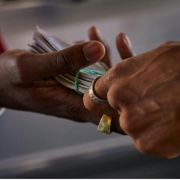
Suppose that you borrow money from a friend and you promise to repay them soon. Wait, you might be thinking, you would never do this! You would avoid having to borrow—for instance, by saving money, or delaying whatever purchase you were planning. This may be the case, but a majority of people in the world do borrow informally, whether by choice or necessity.

Entertain me for a moment and imagine this is really happening. If the thought of borrowing makes you feel uncomfortable, you’re not alone. In a theoretical, economic sense, borrowing is a straightforward, amoral transaction—the only details that should matter are the willingness of the lender to give you the money, and the terms of repayment. If your friend is offering, and you are confident that you will repay, why worry?

But worry we do. Borrowing can prompt a range of different emotions: relief and gratitude towards the person who is loaning you money, anxiety and guilt about your debt to them, and a gnawing awareness that there is now an imbalance between you. Research suggests that, understandably, informal debt damages social relationships when loans are not repaid, but even the act of borrowing itself has varied outcomes: interpersonal conflict and negative emotions on the one hand; stronger relationships and positive feelings on the other.

Your next thought might be that you need more information: why are you borrowing the money? From which friend? Context is essential, and your emotional reaction will likely depend on what you imagine the situation to be: borrowing from a rich friend feels different than borrowing from a poor friend, and borrowing to meet an urgent need feels different than borrowing to purchase something unimportant.

In our recent paper, Hugo Mercier and I point towards a potential explanation for such emotional reactions. Our core claim is that informal, interpersonal borrowing is not just an economic transaction, but a social interaction. As humans, our cognitive systems are highly attuned to fairness in our social lives—this is why we keep track of how people behave towards us and others, and the consequences of their actions.

When we borrow, we risk not just our wallets but our reputations. The strong feelings that emerge include “social emotions” that have evolved to regulate interpersonal relationships, such as gratitude, guilt, anger and shame. These emotions all respond to the welfare tradeoff ratio (WTR): the costs we feel we should pay to benefit someone else, or the costs we feel they should pay to benefit us. In the case of borrowing:

  • A loan that imposes too high a cost on the lender (such as taking money that they have specifically set aside for something else), or delivers too low a benefit for the borrower (such as a frivolous purchase), is indicative of a low WTR and can generate emotions such as guilt (if we are the borrower) and anger (if we are the lender).
  • A loan that imposes only a low cost (such as borrowing from someone with money to spare), or delivers a high benefit (such as an essential purchase), suggests a high WTR, causing positive emotions like gratitude.

In a series of online experiments, we asked participants to imagine, as you just did, that they had borrowed money from a friend, or that they had loaned money to a friend. We provide the crucial context outlined above: the costs to the borrower or the benefits to the lender. In the first study, we measured social emotions for both lenders and borrowers, comparing high and low benefits and high and low costs. In the second study, we measured the change in social emotions after contextual information about the loan was revealed. In the third study, we measured social emotions and repayment intention, relative to two potential lenders.

In the first study, we found that people emotionally respond to welfare tradeoffs in interpersonal borrowing scenarios. For a huge majority of participants, emotions tracked the WTR: they anticipated higher negative emotions (guilt, shame, anger) when the benefit to the borrower was low or the cost to the lender was high, and higher positive emotions (gratitude) when the benefit to the borrower was high or the cost to the lender was high.

The second study explored indebtedness in the context of social emotions. We found that negative emotions (guilt) related to borrowing increased significantly more when the benefit of the loan was revealed to be low rather than high, while positive emotions (gratitude) increased more when the benefit was revealed to be high. Indebtedness increased in both situations, suggesting that it can be triggered by increases in either positive emotions or negative emotions.

In the final study, we found initial evidence that welfare tradeoffs influence not just emotions, but actual borrowing choices. When comparing two potential lenders, participants expected to feel more of all the social emotions (both positive and negative) when the lender asked for nothing in return (besides repaying the loan). These stronger emotions were linked to a curious choice: nearly a third of participants preferred to take on a loan from the other lender, who asked for a favor in addition to repayment, presumably to avoid anticipated negative emotions like guilt.

Despite how common informal borrowing is, it is little-studied compared to formal credit from banks or microfinance institutions. More research is needed in this area. Studying a wider range of cultures is particularly important: if borrowing activates our evolved cognitive systems, we would expect to see cross-cultural similarities in emotional responses. Future research might also explore the role of social emotions in formal borrowing. Most of the evidence about emotional reactions to borrowing comes from surveys about bank loans, with people reporting strong feelings that are linked to social context and responsibility. If social emotions also emerge in the context of formal credit, this suggests that social and reputational concern represents an additional, unappreciated element of financial inclusion.

Read the original paper here: Brackin, M., & Mercier, H. (2025). Owing others: debt, welfare tradeoffs, and the social emotions. Evolution and Human Behavior, 46(4), 106690.

https://www.hbes.com/wp-content/uploads/2025/08/debt.jpg 586 1384 karthikpanchanathan https://www.hbes.com/wp-content/uploads/2019/07/HBES-banner-2019.png karthikpanchanathan2025-08-11 17:37:112025-08-11 17:41:03Debt beyond money: how borrowing triggers our social emotions
Page 7 of 26«‹56789›»
Search Search

Categories

  • Admin (5)
  • AltAc (1)
  • Announcements (151)
  • Anthropology (48)
  • Awards (9)
  • Behavioral Ecology (18)
  • Biology (24)
  • Call for Papers (28)
  • Conferences (44)
  • Courses (4)
  • Economics (6)
  • Events (21)
  • Funding (11)
  • Jobs (89)
  • Journal (3)
  • Linguistics (3)
  • Newsletter (260)
  • PhD Students (53)
  • Postdocs (47)
  • Psychology (84)
  • Uncategorized (22)

Contacts

Membership
Journal Subscription
Contact Form

Communications Officer
Contact Form

Grant Proposals
Submission Form

Grievance Committee
Contact Form

Website
Places to Study
Contact Form

Donate to HBES

Donate Here
Member Login
Not a member? Join HBES
© HBES Copyright.
  • Link to X
  • Link to Facebook
  • Link to Mail
  • Home
  • About HBES
  • Conference
  • Journal
  • Awards
  • Places to Study
  • News
Scroll to top Scroll to top Scroll to top