• Login
  • Join/Renew
  • ADAPT Program
HBES
  • Link to X
  • Link to Facebook
  • Link to Mail
  • Home
  • About HBES
  • Conference
  • Journal
  • Awards
  • Places to Study
  • News
  • Click to open the search input field Click to open the search input field Search
  • Menu Menu

Change in Hormonal Contraceptive, Change in Heart?

August 3, 2020/in Newsletter

by Juliana French & Andrea Meltzer


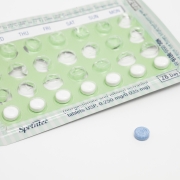
140 million. That’s how many women world-wide are estimated to use hormonal contraceptives such as The Pill. The main function of hormonal contraceptives (and a leading reason for why so many women use them) is to decrease the likelihood of conception. But through administering synthetic hormones to achieve protection against unwanted pregnancy, hormonal contraceptives incidentally alter a myriad of other physiological and psychological processes. In a recent paper, we examined the extent to which hormonal contraceptives may alter processes important for maintaining satisfying relationships, such as sexual satisfaction.

Sex is a central feature of adult romantic relationships, which is reasonable considering the adaptive value sex has for reproductive success. It is therefore not surprising that frequent and satisfying sex plays an important role in the maintenance of people’s long-term romantic relationships. Nevertheless, one of the most common side effects of hormonal contraceptives—an evolutionarily novel medical advancement—is decreased sexual desire among women who use them.

Hormonal contraceptives are therefore, by definition, an evolutionary mismatch. A classic, easy-to-digest example of an evolutionary mismatch concerns modern food availability. Humans have an evolved tendency to seek highly caloric foods because this would have been adaptive in our evolutionary history when such foods were scarce. In 2020, however, this evolved tendency may lead you to crave chocolate chip cookies and fast food. When not kept in check, these (once adaptive) cravings contribute to modern rates of obesity. Similar to the abundance of highly caloric foods in our modern environment being mismatched to our evolved psychology, hormonal contraceptives may be mismatched to our evolved relationship processes, explaining, at least in part, some relationship dysfunction such as sexual dissatisfaction.

So, now you may be wondering, “although hormonal contraceptives help to prevent unwanted pregnancy, are they harmful for my relationship?”

Not so fast – there’s more to the story.

A recent study suggests that whether a woman uses a hormonal contraceptive may be less important for her relationship than whether she changes her hormonal contraceptive use after relationship formation. Imagine one woman, for example, who was not using a hormonal contraceptive when she met her partner but decides to start using The Pill after they have been together for a little while (perhaps because she is likely to engage in relatively more frequent sex and doesn’t want to become pregnant). Imagine another woman who was using The Pill when she met her partner but decides to discontinue using hormonal birth control at some point in her relationship (perhaps because she and her partner are trying to become pregnant).

Hormonal contraceptive use that differs from a woman’s use when she met her partner is called hormonal contraceptive incongruency. Notably, many women become hormonal contraceptive incongruent at some point during their ongoing, long-term relationships. Moreover, because many women begin and discontinue hormonal contraceptives multiple times in the course of a relationship, they repeatedly fluctuate between being congruent and incongruent. Are women less sexually satisfied during those times when their hormonal contraceptive use is incongruent (compared to congruent) from their use at relationship formation? This is exactly the question we sought we answer.

We tested whether such within-person changes in hormonal contraceptive use that results in incongruency is associated with decreases in sexual satisfaction. To do this, we asked 203 heterosexual, newlywed wives if they were using a hormonal contraceptive when they began dating their husbands. Then, at the start of their marriages and again every four to six months for up to four years, those wives (a) completed a measure of sexual satisfaction and (b) reported whether they were currently using a hormonal contraceptive. Results demonstrated that wives reported lower sexual satisfaction at times when their hormonal contraceptive use was incongruent with their use at relationship formation compared to times when their hormonal contractive use was congruent with their use at relationship formation.


“Wives reported lower sexual satisfaction at times when their hormonal contraceptive use was incongruent with their use at relationship formation”


There are two ways to be incongruent with respect to hormonal contraceptive use, however. Whereas some women do not use hormonal contraceptives when they meet their partners and become incongruent when they begin using them, other women use hormonal contraceptives when they meet their partners and become incongruent when they discontinue their use. Is one form of incongruency more strongly tied to decreases in sexual satisfaction than the other? The short answer is, no. In our data, changes in sexual satisfaction that were associated with incongruency did not differ for wives who were incongruent by “starting” hormonal contraceptives after relationship formation versus those who were incongruent by “discontinuing” hormonal contraceptives after relationship formation.

These findings suggest that simply using a hormonal contraceptive may not necessarily increase one’s risk of experiencing sexual dissatisfaction in a relationship. Rather, it is hormonal contraceptive incongruency—either beginning or discontinuing the use of hormonal contraceptives after relationship formation—that seems to be associated with future sexual problems.

This work represents an important methodological advancement for research examining the implications of hormonal contraceptive for romantic relationship processes. Although others have previously demonstrated associations between hormonal contraceptive incongruency and relationship processes (for example, relationship satisfaction and jealousy), this paper is the first to do so using a longitudinal design and within-person analyses. Cross-sectional studies have sometimes failed to detect between-person effects of hormonal contraceptive incongruency, and—indeed—when we examined our data using between-person analyses at baseline we also did not detect differences in sexual satisfaction between women who were congruent versus incongruent. Crucially, the longitudinal method and corresponding analyses that we conducted in this paper enabled us to statistically separate those non-significant between-person differences in incongruency from the key significant within-person changes in incongruency that are central to the underlying phenomenon.

We see this as a fruitful starting point for many future research questions. For example, is changing your type of hormonal contraceptive—perhaps by either switching from one brand of The Pill to a different brand or to a different hormonal method such as The Patch—also a form of incongruency? And, if so, are these other potential forms of incongruency also detrimental to relationships?

Without having the longitudinal data to answer these questions, we can only speculate. It seems probable that, yes, there are likely multiple forms of hormonal contraceptive congruency. But the extent to which other forms of incongruency may impact relationship outcomes, such as sexual satisfaction, likely depends on how different the incongruency-related changes actually are. That is, changing from a progestin-only pill to a different progestin-only pill is less of an incongruency than changing from a progestin-only pill to a combination (estrogen and progestin) pill, and the latter is still less of an incongruency than discontinuing hormonal contraceptives altogether.

When women discuss birth control options with their medical doctors, the conversation often revolves around common side effects, such as weight gain, headaches, mood changes, and decreased libido (to name a few). Relational side effects that may occur as a result of changes in hormonal contraceptive use, such as decreases in sexual satisfaction, are less-often (if ever) considered or discussed. There are many factors that contribute to sexual satisfaction—for example, how attracted you are to your partner (which, by the way, hormonal contraceptives may also alter)—and our recent research suggests that hormonal contraceptive incongruency is one such factor. Given the adaptive significance of long-term relationships for humans, it is paramount to understand how modern novelties such as hormonal contraceptives can impact relationship processes and stability.


Read the paper: The implications of changing hormonal contraceptive use after relationship formation


https://www.hbes.com/wp-content/uploads/2020/08/thought-catalog-psgqUnk8zvM-unsplash-scaled.jpg 1829 2560 Nicole Barbaro https://www.hbes.com/wp-content/uploads/2019/07/HBES-banner-2019.png Nicole Barbaro2020-08-03 12:53:432020-08-03 12:53:43Change in Hormonal Contraceptive, Change in Heart?

Calculating Mate Value: A “Weighty” Task

August 3, 2020/in Newsletter

By Gary Brase, Sydni Huxman & Jordann Brandner


Most of the time, you can only have one. Whether it is a college, a car, a home, or a relationship partner, people make difficult decisions about which options to pursue and which to not pursue. A big part of what makes these decisions difficult is that the options differ along many different traits. Possible relationship partners, for example, can vary on traits such as personality, intelligence, similarity of beliefs, health, physical attractiveness, facial attractiveness, financial status, and social status. These are all different traits, measured on totally different scales, yet somehow they must be combined into an overall evaluation and decision. There is a term for this overall evaluation: mate value. The decision about which possible partner to choose (“mate choice”) becomes easy once the mate values of the possible candidates are evaluated– choose the one with the highest mate value (assuming they will also choose you). That bypasses actually explaining much of the tricky work in this process, though. How is mate value calculated?

It turns out that there are many different possible ways to combine these qualitatively distinct traits to get an overall evaluation. Some strategies may allow high values on a trait to make up for being low on another trait, known as compensatory strategies. Others may be more non-compensatory, where traits can be “deal breakers” and a low value can eliminate a person from consideration. For example, if mate values is calculated with a compensatory calculation, extreme intelligence in a potential partner could make up for a poor financial condition. On the other hand, if mate value is based on a non-compensatory calculation, then no amount of intelligence can compensate for unacceptably poor finances. Yet, other calculations may be some mixture of the two, combining some compensatory aspects and some non-compensatory aspects.

In our recent research, we tested the performance of over seven different plausible ways that mate value could be calculated, across three different studies that used different types of information presentations. Our results show that the compensatory weighted additive model – where all the traits are combined, each adjusted for importance – outperformed all the others. The other models tested included an equal weights model, a “take-the-best” model, an aspiration models, a threshold model, Euclidean distance models, and correlational models. The last two models were also evaluated using participant’s rating of their “ideal” partner’s traits and their “realistic” partner’s traits (because you don’t always get everything you ideally want!).

One study had people choose “Person A” versus “Person B” based on tables that summarized each person’s as being either high or low on each of multiple traits (Personality, Intelligence, Similarity, Health, Body Attractiveness, Face Attractiveness, Finances, and Social Status). Each person in the study repeated this choice between two possible partners for 45 pairs of profiles, which were specifically designed to contrast the different possible mate value calculations. A second study used the same design, but had bars to show how high each possible partner was on each of the traits. A third study was designed to be closer to the format of dating sites; it used photos for each possible partner and descriptions of how well the person rated on each trait.

Regardless of how information was presented to people, the weighted additive model outperformed all the other options in accounting for the choices people made. Almost intuitively, it seems realistic that in the world of dating, high values on one trait may be able to make-up for other traits that they were lacking. Certainly, from an evolutionary standpoint, it might make sense that our ancestors would be willing to accept a partner who was extremely physically fit and healthy so that they could produce healthy offspring, even if they did not totally align in their belief systems or personality types. Part of what makes this research challenging is that all of the methods for integrating traits to calculate an overall mate value perform better than chance. The weighted additive model, though, did the best by predicting more of the choices than other models.


“Almost intuitively, it seems realistic that in the world of dating, high values on one trait may be able to make-up for other traits that they were lacking.”


Dating and choosing a partner is a complex process in the real world, and there are other factors involved beyond these studies. For example, potential partners (unlike cars and houses) have to reciprocate a positive choice. There are also possibilities that mate value evaluations incorporate other traits, or differ across demographic factors (such factors could include individual differences within populations or across populations – including non-WEIRD populations). There is also fascinating recent work on how people integrate the different traits of potential friends, extending this work to an additional, rich topic. Although there is much more work to be done in this arena, there is now strong evidence for the compensatory nature of traits in human dating decisions.


Read the paper: “Weighting” to find the right person: compensatory trait integrating versus alternative models to assess mate value

https://www.hbes.com/wp-content/uploads/2020/08/kelly-sikkema-4le7k9XVYjE-unsplash-scaled.jpg 1611 2560 Nicole Barbaro https://www.hbes.com/wp-content/uploads/2019/07/HBES-banner-2019.png Nicole Barbaro2020-08-03 12:52:202020-08-03 12:52:20Calculating Mate Value: A “Weighty” Task

HBES Funding Grants Solicited for Oct 1 Deadline

June 16, 2020/in Newsletter

The HBES Executive Council is now soliciting funding applications from HBES members for an October 1, 2020 deadline.


Two grants are available for this round of funding:

1. General Funding Grant, which is intended to subsidize costs associated with hosting events such as conferences and pre-conference meetings, workshops, and other activities or educational opportunities related to the mission of HBES.

HBES will fund proposals of up to $5,500 (we do not fund honoraria).

Priority is given to proposals that:

  1. Benefit junior scholars (and, especially students) either directly, through subsidizing travel and cost of attendance to events or, indirectly, through educational opportunities afforded by the funding;
  2. Have a broad, wide-reaching impact; and
  3. Support is not easily available through other channels.


2. Student Funding Grant, which is intended to subsidize the cost of hosting a guest speaker at the student’s home institution. The topic of the guest speaker must be related to the mission of HBES.

HBES will fund proposals of up to $2,500 to subsidize travel, accommodation, and event costs for the speaker (we do not fund honoraria).
Funding is limited to one funded proposal per institution, per year.
The student applicant is required to submit a written report to the council following the event.


See our Funding page for details, submission guidelines, and submission links.

Not an HBES member? Join or renew today!

https://www.hbes.com/wp-content/uploads/2020/06/fabian-blank-pElSkGRA2NU-unsplash-scaled.jpg 1707 2560 Nicole Barbaro https://www.hbes.com/wp-content/uploads/2019/07/HBES-banner-2019.png Nicole Barbaro2020-06-16 14:48:492020-06-16 14:48:49HBES Funding Grants Solicited for Oct 1 Deadline

Helping Behavior is Non-Zero-Sum

June 7, 2020/in Newsletter

by Michael Ent


In the television show Man vs. Wild, Bear Grylls would venture into inhospitable areas attempting to show viewers how one could survive alone in the wilderness. Few people would be enthusiastic about following in his footsteps. This reluctance is partly because humans generally rely on help from others to fulfill even basic survival needs like food and shelter. Despite extensive training, even Grylls frequently ended up scrounging for insects and drinking his own urine out of desperation.

While studying a group of modern hunter-gatherers, Lawrence Sugiyama found that a majority of adults had suffered an injury or illness that hindered their foraging ability to the point that they would have likely starved if they had not received help from others. In such a group, it often pays to help others in need because you might need to rely those same people in the future if you find yourself in dire straits. In a less relatable example of helping behavior, vampire bats that have just eaten have been found to regurgitate blood to feed hungry bats with whom they have established a reciprocal relationship. When one bat finds food and her friend doesn’t, she may share some of the spoils; when she is starving and her friend finds food, her friend may repay the favor. Importantly, for this type of reciprocal helping behavior to evolve, the benefit to the recipient must outweigh the cost to the helper – it wouldn’t do much good for a satiated bat to regurgitate blood into the mouth of another satiated bat. In other words, for reciprocal exchange relationships to be mutually beneficial, individual helping acts must be non-zero-sum—one party’s gain does not correspond to equal losses incurred by the other party.

In our research, my co-authors and I found that, when people reflected on helping episodes from their past, they reported that the benefits to the recipients vastly outweighed the costs to the helpers. In other words, the help was non-zero-sum. In this research, pairs of friends recalled and reported about occurrences in which they helped each other. This yielded two accounts of each helping episode: one from the perspective of the helper and one from the perspective of the recipient. Both helpers and recipients consistently, and to an equal degree, reported that the benefits of the help outweighed the costs. If people tend to help one another when they can confer large benefits to their relationship partners without incurring much cost, then acts of helping don’t merely transfer value from one person to another, they create gains through exchange.


“If people tend to help one another when they can confer large benefits to their relationship partners without incurring much cost, then acts of helping don’t merely transfer value from one person to another, they create gains through exchange.”


This research relied on subjective reports of costs and benefits, so there could be motivational factors that reduce people’s tendency to report help as non-zero-sum. People tend to report events in ways that cast themselves in an unrealistically favorable light, known as self-enhancement bias. By exaggerating the costs of the help they provided, helpers could cast themselves as self-sacrificing heroes. On the other side of the coin, by downplaying the benefits of the help they received, recipients could highlight their own self-reliance. Both of these distortions could reduce the degree to which people would regard helping acts as non-zero-sum. Nevertheless, we found that both helpers and recipients consistently reported that the benefits of help outweighed the costs.

In our research, helpers and recipients differed on one important dimension: their perceptions of indebtedness. Helpers underestimated the degree to which recipients felt indebted as a result of the help they received. This finding dovetails with previous research that suggests that recipients tend to view the help they receive as more generous than those who provided the help. This type of helper-recipient asymmetry could enable relationships strengthen over time. For example, if I do a favor for my friend, I might view it as trivial and undeserving of reciprocity. However, my friend might view it as a big deal and repay the favor. In this case, I would feel like I received excessive reciprocity and would be motivated to do something nice for my friend in the future. In this way, the helper-recipient asymmetry we found in our research could contribute to self-reinforcing cycles of altruism. Previous research on the victim-perpetrator “magnitude gap” has found a similar pattern at play in escalating cycles of revenge. Victims tend to view transgressions as more heinous than perpetrators. Because of this asymmetry, when victims seek revenge, they tend to do so in a way that seems excessive to the original perpetrators (who may feel that they now have a score to settle)5. Taken together, helper-recipient and victim-perpetrator asymmetries may lead acts of altruism and acts of harm to escalate over repeated interactions of the parties involved. In other words, both altruistic and antagonistic relationships may amplify over time.


“Although helping behavior is not unique to humans, it is a vital part of human nature.”


In a now famous exchange, the anthropologist Margaret Mead was asked what she considered to be the first sign of civilization. Instead of citing tools, religious artifacts, or the like, she cited a healed human femur that was about 15,000 years old. She explained that a broken femur would have been tantamount to a death sentence, and the fact that it had healed indicated that the person must have received help from others. Although helping behavior is not unique to humans, it is a vital part of human nature. The non-zero-sum nature of human helping behavior means that acts of help don’t merely redistribute value, they bring more goodness into the world.


Read the paper: Helping behavior is non-zero-sum: Helper and recipient autobiographical accounts of help

https://www.hbes.com/wp-content/uploads/2020/06/cytonn-photography-vWchRczcQwM-unsplash-scaled.jpg 1709 2560 Nicole Barbaro https://www.hbes.com/wp-content/uploads/2019/07/HBES-banner-2019.png Nicole Barbaro2020-06-07 23:43:242020-06-07 23:43:24Helping Behavior is Non-Zero-Sum

How Does the Mind Make Friend Choices?

June 7, 2020/in Newsletter

by Jaimie Arona Krems & Daniel Conroy-Beam with thanks to Laureon A. Merrie


Lenù & Lila, Gene & Phineas, Thelma & Louise, Cap & Bucky. Best friends are fixtures in our lives. Best friends might not benefit our fitness as obviously and directly as mates do, but having good friends is thought to be the next best thing for one’s health behind quitting smoking. In a recent paper, we ask how the mind might integrate our myriad friend preferences—for friends who are smart like Lenù, charismatic like Phineas, steadfast like Thelma or Cap—to make actual friend choices.

Perhaps in an ideal world, everyone we liked would like us back, time and affection would be infinite, and everyone we’ve ever encountered (and liked) we could maintain as friends. But as nice as ideal worlds and adages about the unbounded nature of love can sound, they bump up against reality. For example, time is inelastic yet required to maintain social relationships. To some extent, our affections might also be finite. In the end, we can maintain only so many ties at any one time.

Somehow, then, we must evaluate, compare, and ultimately select friends. Considering how important having friends and their support can be for one’s survival—and potentially even the thriving of one’s offspring—these friend choices matter.

To make these choices, we need an algorithm that combines information about what we prefer in friends, and the extent to which each prospective friend fulfills those friend preferences, presumably translating this information into a summary rating of sorts. There are a number of “preference integration” algorithms that could accomplish this.

In the mating literature, a Euclidean integration hypothesis has performed quite well. Therein, the Euclidean algorithm represents mate preferences and prospective mates as points within an n-dimensional space, computing a summary mate value that is inversely proportional to the distance between those points. For example, this summary can integrate the discrepancies between wanting a friend who’s a 10/10 in loyalty, a 10/10 on intelligence, a 4/10 on optimism, and so on, with a prospective friend who is a 6/10 on loyalty and intelligence and an 8/10 on optimism.

We tested whether some of those critical predictions derived from a Euclidean integration hypothesis—which have already found support in the mating literature—hold in the friendship domain. To do this, we gathered data from three separate samples of US participants (N = 817 undergraduate and adult community participant convenience samples). In each sample, we asked participants to rate themselves on 23 trait characteristics using 8-point bipolar scales. For example, we’d ask people to rate themselves as being “Very loyal” to “Very disloyal”. Participants also completed ratings for both their ideal same-sex best friends and their actual same-sex best friends. They also repeated this for their ideal and actual same-sex close friends and for their ideal and actual (or most recent) romantic partners.

We then computed several dimensions of partner value, including the friend and mate values of each participant, as well as the extent to which each participant’s actual best friends (and close friends, mates) fulfilled their ideals. For example, a person’s best-friend preference fulfillment was calculated as the Euclidean distance between the preferences they marked having in a best friend and where they marked their actual best friends as falling on those trait characteristics.

Using these data, we found support for several critical predictions implied by a Euclidean integration hypothesis in the friendship domain. First, we predicted that people who possess characteristics that render them ideal friends (i.e., people with high friend value) should be highly sought after, meaning that they have their pick of friends. Thus, we predicted—and found—that high friend-value individuals seem able to attract friends who better fulfill their preferences. We also predicted and found that high friend-value individuals not only set higher standards for ideal friends—after all, they would seem able to make such demands—but also that they report having real-world best friends who themselves have higher friend-value. In addition, we also explored these patterns with respect to people’s mate value, mate preferences, and mate preference fulfillment—replicating Conroy-Beam and colleagues’ previous research.


“We also predicted and found that high friend-value individuals not only set higher standards for ideal friends, but also that they report having real-world best friends who themselves have higher friend-value”


We also started to explore something new: the dissociability of friend- and mate-value. On one hand, the characteristics that make one an ideal friend (e.g., being nice) can overlap with the characteristics that make one an ideal mate (e.g., being nice). At the same time, people might also have some different preferences for prospective friends and mates. A same-sex friend who is highly sexually attractive might be a threatening rival in the mating domain, for example, but an other-sex mate who is highly sexually attractive might be rather desirable.

So, do people’s friend values better predict their friend outcomes (than mate outcomes), and do people’s mate values better predict their mate outcomes (than friend outcomes)?

Sort of.

We find some, albeit mixed, support for dissociability. This finding is particularly intriguing, though, insofar as it adds to the broader conversation about association value (see Michael Bang Petersen, Aaron Sell, John Tooby, and Leda Cosmides’ 2012 paper in this same journal for more on that).

A large part of the impetus for our work was to address the gap in friendship research. To some extent, these important relationships remain an evolutionary mystery. More work on friendships could contribute to solving that puzzle. Luckily, a pretty handy playbook for conducting some future work on friendship already exists—the robust, deep literature on mating relationships.

Here, drawing from work conducted in the mate preferences literature, we found some support for the Euclidean integration hypothesis, suggesting that this algorithm might be how the mind integrates friend preferences to make friend choices. However, exciting new work recently accepted at EHB also suggests another algorithm to explore in friendships (see Bradner, Brase, & Huxman, in press). We look forward to pleasantly arguing with our friends about this, and to the future of work on friendship in evolutionary social science.


Read the paper: First tests of Euclidean preference integration in friendship: Euclidean friend value and power of choice on the friend market

https://www.hbes.com/wp-content/uploads/2020/06/eye-for-ebony-j28h3uNmKCA-unsplash-scaled.jpg 1707 2560 Nicole Barbaro https://www.hbes.com/wp-content/uploads/2019/07/HBES-banner-2019.png Nicole Barbaro2020-06-07 23:43:032020-06-07 23:43:03How Does the Mind Make Friend Choices?

Evolving our Understanding of Morphometric Cues to Behavior Through the Study of Nonhuman Primates

June 7, 2020/in Newsletter

by Vanessa Wilson and Drew Altschul


Over the last 16 years, the study of human facial morphometry, and its potential links to social behaviour, has received a lot of attention. One metric in particular, the facial Width-to-Height ratio, has been linked to an array of dominance-like traits in males, such as aggression, achievement drive, psychopathy and (low) cooperation. In other words, men with higher ratios (i.e. relatively wider faces) tend to exhibit higher levels of dominance-like traits. Moreover, studies have found that people also tend to associate wider faces with being more dominant. The idea that we can ‘read’ certain traits in a person’s face is certainly an attractive one. But in reality, is such a relationship really so straight forward?

A number of studies have now cast doubt on the idea that these relationships are anything more than spurious. Indeed, early proposals that testosterone is the underlying mechanism that drives the relationship between aggressive, dominant male behaviours and wider faces are not strongly supported in the literature. There are several alternative explanations for what seems to be a tentative link between facial morphology and social behaviour. Amongst them is the evolutionary mismatch hypothesis, which proposes that facial cues to behavioural tendencies might have been salient in ancestral environments, yet no longer predict those tendencies in modern environments. Nevertheless, ancestral biases remain, resulting in a mismatch between existing behavioural traits, and how people predict those traits from facial features.

Where then, do nonhuman primates come into this? The problem with human-focuses studies is that, aside to the fact that most studies draw their samples from WEIRD populations (western, educated, industrialised, rich and democratic), by concentrating research on only humans, we learn little about the origins of facial morphology as a cue to social behaviour. If we really want to get into the evolution of the facial Width-to-Height ratio, or any other metric, as a behavioural cue, then we need to consider whether parallel relationships exist in other species. One theory that addresses the mechanisms underlying the link between face width and aggression, proposes that a wider zygomatic arch (producing a wider face) could improve skull strength, and therefore offers advantage in physical combat. Since humans live in relatively egalitarian societies, with low levels of in-group aggression, this could explain the weak findings for facial metrics as cues to traits pertaining to combat advantage. By examining whether similar relationships exist in species with lower levels of social tolerance and higher physical aggression, one can test this hypothesis.


“By concentrating research on only humans, we learn little about the origins of facial morphology as a cue to social behaviour.”


In our recent study, we examined links between facial morphometry and personality ratings in chimpanzees, a species that live in male-dominated, fission-fusion societies, where male displays of strength and physical aggression play an important role in social interactions. Notably, examination of chimpanzee personality dimensions on a 54-item scale reveals six components, five of which resemble the human ‘Big five’ (Openness, Conscientiousness, Extraversion, Agreeableness, Neuroticism), and a sixth that is labelled Dominance. Several of these components have been linked to observations of aggression in chimpanzees, in particular Dominance. We examined keeper-ratings on these six dimensions in relation to photo-derived measures of the facial Width-to-Height ratio, in a sample of 131 captive chimpanzees from zoos and research facilities in Japan, the UK and the USA. We found no evidence of sexual dimorphism in the facial Width-to-Height ratio, consistent with findings in humans. We did find a relationship between facial Width-to-Height ratio and the dimension Dominance, but in females, rather than males (as has been reported in the human literature), which was specific only to the western subspecies (Pan troglodytes verus).

At first glance these results may seem surprising. The differences in findings for males and females could, however, be explained by differences in rank stability with age. That is, females tend to maintain somewhat stable ranks across the lifespan, whereas males compete over social status, which tends to vary across the lifespan. Indeed, since male chimpanzees tend to be more aggressive than females, these findings do not support the hypothesis that the facial Width-to-Height ratio provides a combat advantage. The picture is perhaps more complicated than that, since our findings suggest that how social status is both achieved, and maintained, could play a role in whether the facial Width-to-Height ratio predicts dominant tendencies.

Moreover, we compared our findings with those from previous studies on humans, and bonobos, by examining differences in the strength of relationship between facial Width-to-Height ratio and social traits. We found that, compared to results for chimpanzee females and bonobos, the effect sizes for both humans and chimpanzee males were negligible, with the strongest effect emerging for bonobo Affiliative Dominance. Given that both bonobos and humans are considered to be more socially tolerant than chimpanzees, these differences suggest that social style (i.e. the level of tolerance a species exhibits) is not a strong predictor of trait-related variance in the facial Width-to-Height ratio, at least amongst apes.

So where do these findings stand with regard to current interpretations of the human literature? Alongside the accumulating results from brown capuchins, the Macaca genus, and bonobos, these findings suggest that the facial Width-to-Height ratio existed in a common primate ancestor, before the divergence of New World monkeys. Whilst questions remain about both the existence and strength of the facial Width-to-Height ratio as a cue to behavioural tendencies in humans, answers to these questions may be found by taking a comparative approach to understanding what selection pressures have driven this relationship. Specifically, examining broader differences in social style and rank stability could hold the key to understanding the variable nature of this relationship amongst primates.


“Our own recent evolutionary history, with the development of culture and language, could have provided alternative means to communicate dominance, reducing the need for facial cues to such traits”


For now, our own interpretations support the proposal of Wang and colleagues for an evolutionary mismatch in humans: our own recent evolutionary history, with the development of culture and language, could have provided alternative means to communicate dominance, reducing the need for facial cues to such traits. Yet the floor remains open for more thorough investigation, and we strongly encourage other researchers pondering this field to embrace comparative research as well as non-WEIRD samples, in order to understand the existence, origins and mechanisms of the relationship between facial morphology and dominance behaviour.


Read the paper: Facial width-to-height ratio in chimpanzees: Links to age, sex and personality

https://www.hbes.com/wp-content/uploads/2020/06/satya-deep-xttQG4YyJ6I-unsplash-scaled.jpg 2033 2560 Nicole Barbaro https://www.hbes.com/wp-content/uploads/2019/07/HBES-banner-2019.png Nicole Barbaro2020-06-07 23:42:412020-06-07 23:42:41Evolving our Understanding of Morphometric Cues to Behavior Through the Study of Nonhuman Primates

A Critique of Life History Approaches to Trait Covariation

June 7, 2020/in Newsletter

by Brendan Zietsch


Life history theory has been promoted as a unifying framework for understanding trait covariation in the social sciences. Underlying this approach is the assumption that patterns of trait covariation across species, and the Darwinian principles thought to underlie those patterns, can be extrapolated to trait covariation across individuals within human populations. In particular, it is assumed that a ‘fast-slow’ continuum of life history ‘strategies’, observed across species, should be observed across individuals within human populations – not only with regard to traditional life history traits but practically all individual differences, including personality and psychopathology.

In my paper with Morgan Sidari we argue that these assumptions are not justified. The processes that create trait covariation across species and across individuals are fundamentally different, and so the two types of covariation need not be parallel or even related. This fundamental problem undermines a great deal of research in this burgeoning field, and warrants a rethink moving forward.

To illustrate the point, we use the simple example of body height. Humans are taller than rabbits because of their different genes. Individual humans also differ in height largely because of their different genes. But the processes that create genetic height differences between rabbits and humans (i.e. Darwinian evolution) are nothing like the processes that create genetic height differences between individual humans. The fact I am taller than a rabbit is primarily due to our different histories of Darwinian evolution over countless generations of different selective pressures; the fact I am taller than my friend or my brother has little (or nothing, in the case of my brother) to do with our different histories of Darwinian evolution, but rather my chance inheritance of more “tall alleles” compared to them. As with all individuals of European ancestry, many of my friends and I share nearly the same set of ancestors who were alive 1,000 years ago (and likely many ancestors more recent than that) – a very short period in evolutionary time. Therefore, the reason my friends and I are of different heights is largely independent of our different histories of Darwinian evolution. We are different heights mostly for the same reason my brother and I (who share all our ancestors) are of different heights – that is, the random shuffling process of Mendelian segregation during meiosis gave us different combinations of our ancestors’ genetic material. Overall, this example highlights why we cannot straightforwardly transfer the same evolutionary principles from the explanation of human-rabbit differences to human-human differences.


“Darwinian phenotype-environment matching at the species level and plasticity at the individual level are completely different processes and may or may not lead to equivalent predictions regarding trait covariation.”


The same argument applies to trait covariation. If environments that tend to favour large bodies also tend to favour high parental investment, then genes controlling the two traits will come to covary across species. There is no equivalent evolutionary process creating trait covariation across individuals. Selection and evolution can lead to phenotypic plasticity and adaptive calibration of individuals’ traits to their personal environments; but Darwinian phenotype-environment matching at the species level and plasticity at the individual level are completely different processes and may or may not lead to equivalent predictions regarding trait covariation. Similarly, there are different consequences at the species and individual levels in situations where selection on one trait depends on the level of another trait. If genes for high parental investment are advantageous in a large species and disadvantageous in a small species, genes for large body size and genes for high parental investment will tend to go together across species, and likewise genes for small body size and low parental investment. But there is no equivalent evolutionary process by which variation in different traits within a population can be combined based on how well they work together. Darwinian evolution cannot combine “tall alleles” with “high parental investment alleles”, and “short alleles” with “low parental investment alleles”, within a sexually reproducing population in the same way as it can across species, because of Mendel’s Law of Independent Assortment: segregating alleles are transmitted to offspring independently of each other, so allele configurations are not inherited.

We explain why exceptions to Mendel’s Law of Independent Assortment – correlational selection, physical linkage, non-random mating, and pleiotropy – don’t change our central point. We also discuss adapted developmental plasticity, where variation and covariation of life history-related traits is shaped by environmental conditions during an individual’s development. In particular, we note behavioural genetics research that shows little influence of early environment on trait variation and covariation, and why these findings pose problems for these plasticity-based life history accounts. Further, we discuss why proposed trade-offs between specific life history traits – trade-offs that are typically on the within-individual level – need not translate to covariation of those traits across individuals.


“Much of the life history work on trait covariation in humans does not have a solid theoretical grounding; there is little basis for the fast-slow continuum as a framework for understanding human trait covariation.”


Overall, we conclude that much of the life history work on trait covariation in humans does not have a solid theoretical grounding. In particular, there is little basis for the fast-slow continuum as a framework for understanding human trait covariation. Given the frequent attacks on evolutionary psychology from other disciplines, our field must be especially vigilant for conceptual flaws in the underpinnings of our research – otherwise, we risk validating those criticisms. Those using life history theory to study individual differences and trait correlations must ensure their paradigm is properly connected to the fundamentals of evolutionary theory.


Read the paper: A critique of life history approaches to human trait covariation

https://www.hbes.com/wp-content/uploads/2020/06/tobias-adam-Twm64rH8wdc-unsplash-scaled.jpg 1714 2560 Nicole Barbaro https://www.hbes.com/wp-content/uploads/2019/07/HBES-banner-2019.png Nicole Barbaro2020-06-07 23:41:432020-06-07 23:41:43A Critique of Life History Approaches to Trait Covariation

2020 HBES Award Information

April 6, 2020/in Newsletter

Dear HBES members,

There have been many questions about how our annual society and conference awards will be handled given the cancelation of the annual HBES conference that was scheduled to be held in June. The Executive Council has made the following decisions with regard to the society and conference awards.

2020 HBES Early Career Award and Lifetime Achievement Award

Nominations for the 2020 HBES Early Career Award and Lifetime Achievement Award will still be considered this year, and will be formally celebrated at HBES 2021 in Palm Springs (along with the HBES awards for 2021). We have, however, extended the deadline for the nominations to July 1, 2020 given the pandemic situation. Please see our website (see the ‘Nomination’ tab under each award) for eligibility, application guidelines, and submission link.

2020 New Investigator Award and Postdoctoral Award

The New Investigator Award and Postdoctoral Award will not be conferred this year because they require a talk at the annual HBES conference, which has been cancelled. Because for some award candidates 2020 was the last eligible year for one of the awards, we will be extending the eligibility by one year for the 2021 HBES conference awards. Specific eligibility requirements will be available at a later date when the HBES 2021 conference website is live later this year.

Thank you for your understanding during this difficult situation.

Sincerely,
The HBES Executive Council

https://www.hbes.com/wp-content/uploads/2020/04/giorgio-trovato-_XTY6lD8jgM-unsplash-scaled.jpg 1707 2560 Nicole Barbaro https://www.hbes.com/wp-content/uploads/2019/07/HBES-banner-2019.png Nicole Barbaro2020-04-06 14:50:372020-06-12 16:14:252020 HBES Award Information

Why Do We Stereotype Others by Sex and Age?

April 3, 2020/in Newsletter

by Oliver Sng, Keelah Williams, & Steven Neuberg


The study of sex and age stereotypes—the general beliefs we hold about others based on their sex and age—has had a long history. In a recent paper, we present a new perspective to thinking about this topic. Specifically, we propose that social perceivers are actually “lay adaptationists”. In other words, although lay perceivers are not aware of formal evolutionary theories (e.g., parental investment, life history), they nonetheless pick up on and generate predictions about how others’ sex and age influence their goals and behaviors.

From this perspective, perceivers categorize and stereotype others by sex and age, because another person’s sex and age are associated with their goals (e.g., learning, mating, parenting), which in turn are associated with distinct opportunities and threats they might pose (e.g., potential mates, potential mate competition). This generates several insights.

First, it is not sufficient for perceivers to be categorizing others in terms of just sex, or just age. This is because goals vary by the interactive combinations of sex and age (e.g., men are more oriented towards short-term mating goals than women are, but especially so at younger ages). To usefully represent distinct social opportunities and threats, perceivers should categorize others in terms of the combination of others’ sex and age.

Indeed, they do so. Using a memory recall paradigm often referred to as “who-said-what”, we find that perceivers are more likely to confuse individuals of the same sex or of the same age group (e.g., confusing women with other women instead of men, confusing 60 year-olds with other 60 year-olds instead of 20 year-olds). More important, they are especially likely to confuse individuals of the same sex and age (e.g., confusing 20-year-old women with other 20-year-old women instead of 60-year-old women or 20- and 60-year-old men). Hence, perceivers mentally group others not by sex or age independently, but by the interaction of both.

The same principle should apply to stereotypes—beliefs about how women and men of different ages are like. Indeed, in another set of studies, we find that too. For example, perceivers believe that men are more oriented towards seeking short-term partners than women are, but this sex stereotype is stronger for stereotypes of younger (e.g., 28-year-olds) than older individuals (60-year-olds). The reverse is observed for stereotypes of long-term mating orientation. Young women (e.g., 28-year-olds) are stereotyped to be more oriented towards seeking and maintaining long-term relationships than young men, but this stereotype disappears for stereotypes of older individuals (e.g., 60-year-olds). Hence, perceivers also hold interactive sex and age stereotypes.

Finally, the current perspective also has implications for thinking about certain widely studied sex stereotypes. A considerable literature has accumulated on sex stereotypes of agency and communion. Agency comprises traits that focus on self-assertion, such as being independent and competitive. Communion comprises traits that maintain harmonious social relationships, such as being caring and understanding.

Why are men typically stereotyped as more agentic than women? One explanation may be because men are stereotyped as more oriented than women towards short-term mating goals (as just mentioned above), and the pursuit of short-term mating goals likely requires more agentic behavior, such as competitiveness and dominance. If the sex stereotype of agency is indeed derived from sex stereotypes of short-term mating goals, then presenting perceivers with direct information that both men and women are similarly oriented towards seeking short-term mates should eliminate the sex stereotype of agency.

“Providing perceivers with direct information about the adaptive goals (e.g., mating, parenting) that male and female targets are engaging in seems to override prominent sex stereotypes of agency and communion.”

Indeed, that is the case. Perceivers presented with a male or female target, without any additional information, stereotype the man as more agentic than the woman. However, when perceivers are given information that a woman and a man are similarly spending time looking for short-term partners, the woman and man are stereotyped as equally and highly agentic.

A similar logic could be applied to thinking about sex stereotypes of communion. Why are women stereotyped to be more communal than men? One explanation is that the sex stereotype of communion may be derived from sex stereotypes of long-term mating goals (of women as being more oriented towards such goals than men), because seeking and maintaining long-term mating relationships requires communal traits such as kindness and care. If this is so, then perceivers presented with men and women who are similarly engaging in long-term mating goals should be viewed as similarly communal.

This prediction is borne out, too. In the absence of additional information, perceivers stereotype a female target as more communal than a male target, consistent with the stereotype. However, when told that both targets have and spend time with a long-term relationship partner, the male and female targets are viewed as equally communal

In general, providing perceivers with direct information about the adaptive goals (e.g., mating, parenting) that male and female targets are engaging in seems to override prominent sex stereotypes of agency and communion. Prominent sex stereotypes appear to emerge from people’s stereotypes about sex and age differences in the relative prominence of adaptive goals.

To summarize, perceivers categorize and stereotype by the interactional combination of others’ sex and age, and these stereotypes suggest that perceivers are lay adaptationists in certain ways. For instance, just as parental investment theory predicts that males in our species are more likely to invest in mating effort than women are, lay perceivers also “predict”, through sex and age stereotypes, that men (and particularly young men) are more oriented than women towards short-term mating goals and behaviors. These adaptive goal stereotypes may in turn underpin other stereotypes, such as sex stereotypes of agency and communion.

The findings outlined above may seem intuitive, and intuitive findings are sometimes devalued. But that the findings seem intuitive to you as a reader is itself something the perspective would predict, simply because you are also a lay adaptationist (and likely also a professional adaptationist!). In other words, you are likely also using the sex and age of others, interactively, to predict their goals and behavior. Hearing that people categorize and stereotype by sex and age in these particular ways should therefore be unsurprising.

The idea that perceivers may be lay adaptationists is useful beyond enhancing our understanding of the social perception of sex and age. In other work, we apply a similar approach for better understanding race stereotyping. Specifically, certain stereotypes of Black and White Americans may not be about race, per se, but instead may reflect what we call ecology stereotypes—beliefs about the traits of individuals who live in more versus less harsh and unpredictable ecologies. Supporting this, we have found that providing perceivers with direct information about a Black or White individual’s home ecology can override race stereotypes of traits such as impulsivity and aggressiveness.

Thinking about perceivers as lay adaptationists lends a new way of thinking about social perception and stereotyping. Stereotyping, in particular, is traditionally presented as an outcome of “lazy” minds trying to simplify the world. The current work presents a more nuanced picture. Social perceivers are sensitive to the interactions of sex and age in thinking about and predicting the traits of others. When making social inferences about agency and communion, perceivers also prioritize information about an individual’s relevant goals, over the general category an individual belongs to. Indeed, our stereotypes may be more strategic than typically thought.


***********


Read the paper: Sex-age stereotyping: Social perceivers as lay adaptationists

https://www.hbes.com/wp-content/uploads/2020/04/sandy-millar-KhStXRVhfog-unsplash-scaled-e1585923511572.jpg 1312 2560 Nicole Barbaro https://www.hbes.com/wp-content/uploads/2019/07/HBES-banner-2019.png Nicole Barbaro2020-04-03 14:21:582020-04-03 14:22:19Why Do We Stereotype Others by Sex and Age?

Comparing Evolutionary Models of Sexual Initiation

April 3, 2020/in Newsletter

by Kristin Snopkowski & John Ziker


Life history theory examines how organisms allocate energy throughout the lifespan.  While it was originally developed in biology, more recently a large number of researchers have begun to use life history theory as a way to examine phenotypically plastic responses to early life factors in humans.  This research has examined how family dynamics and stressors earlier in life influence ‘life history events,’ such as pubertal timing, age at first reproduction, age at sexual initiation, and more rarely, investment in offspring.

In this research, we tested a variety of different evolutionary hypotheses that have been proposed – frequently under the theoretical umbrella of life history theory – to see which were best at predicting sexual initiation among a sample of Canadian adolescents who were followed longitudinally since birth (over eight waves of data collection).  The National Longitudinal Survey of Children and Youth, a survey conducted by Statistics Canada, provides a wealth of information about children and their families.  This allowed us to examine a variety of different factors that have been predicted to influence the timing of life history events (although, our analysis only examined sexual initiation).  This includes factors such as: childhood psychosocial stressors, such as parenting behaviors, socioeconomic status, stressful events; paternal investment indicators, including contact with father, parental divorce, emotional closeness with father; mortality cues, for example, health of caregivers, adolescent chronic illness; unpredictability, such as changes in childcare and household moves; social support, for instance, adolescent social support other than peers; prenatal factors, including birth health and gestational diabetes; and intergenerational conflict indicators, measured as having half siblings.

We utilized a model selection procedure where we minimized AIC scores to predict whether adolescents had engaged in consensual sexual intercourse by the ­eighth wave of data collection (age 14/15). After identifying the predictors that minimized the AIC score for each variable set, we ran all combinations of models (since we had eight sets of variables, this led to 256 different combinations).  We then examined all models within three of the best AIC score (indicative of having a similar level of statistical support) and calculated the importance score for each variable set.

“The lack of an association between paternal investment variables (frequently discussed as ‘father absence’) was surprising given the frequency with which it has been found in other contexts”

The results showed that psychosocial stressors (either early-life or adolescent), mortality cues, and intergenerational conflict variables were included in all of the top models. Prenatal factors were included in the top five models. Social support and unpredictability were common across top models (but not included in all models).  There was greater support for early-life psychosocial stressors over stressors during adolescence.  Paternal investment variables were not included in any of the top models.  Importance scores mirrored the AIC results: extrinsic mortality cues had the most importance, followed by intergenerational conflict, early childhood psychosocial stressors and prenatal factors. Social support and unpredictability predictors followed, with importance scores between 0.58 and 0.54.  Finally, paternal investment has the lowest importance (0.11).

As previous research has found, there was good support for early-life psychosocial stressors and extrinsic mortality cues being associated with sexual initiation by age 14/15. As predicted social support, unpredictability, and prenatal factors were also associated with sexual initiation.  Novel results of this study include the role of half-siblings and its association with sexual initiation, as predicted by intergenerational conflict models (a few recent papers have also found evidence of this).  The lack of an association between paternal investment variables (frequently discussed as ‘father absence’) was surprising given the frequency with which it has been found in other contexts (mostly western contexts, like the one we examined in this study).  It is possible that intergenerational conflict factors confound the effect of parental divorce, so it is important to include both factors in future models to detangle their effects.


******

Read the paper: “Sexual initiation among Canadian youth: A model comparison approach of evolutionary hypotheses shows greatest support for extrinsic mortality cues, intergenerational conflict, and early life psychosocial stressors”


https://www.hbes.com/wp-content/uploads/2020/03/timo-stern-EvcUtLF12XQ-unsplash-scaled.jpg 1441 2560 Nicole Barbaro https://www.hbes.com/wp-content/uploads/2019/07/HBES-banner-2019.png Nicole Barbaro2020-04-03 14:21:112020-04-03 14:21:11Comparing Evolutionary Models of Sexual Initiation
Page 25 of 26«‹23242526›
Search Search

Categories

  • Admin (5)
  • AltAc (1)
  • Announcements (151)
  • Anthropology (48)
  • Awards (9)
  • Behavioral Ecology (18)
  • Biology (24)
  • Call for Papers (28)
  • Conferences (44)
  • Courses (4)
  • Economics (6)
  • Events (21)
  • Funding (11)
  • Jobs (89)
  • Journal (3)
  • Linguistics (3)
  • Newsletter (260)
  • PhD Students (53)
  • Postdocs (47)
  • Psychology (84)
  • Uncategorized (22)

Contacts

Membership
Journal Subscription
Contact Form

Communications Officer
Contact Form

Grant Proposals
Submission Form

Grievance Committee
Contact Form

Website
Places to Study
Contact Form

Donate to HBES

Donate Here
Member Login
Not a member? Join HBES
© HBES Copyright.
  • Link to X
  • Link to Facebook
  • Link to Mail
  • Home
  • About HBES
  • Conference
  • Journal
  • Awards
  • Places to Study
  • News
Scroll to top Scroll to top Scroll to top