Culture Conference 2021: Registration and Abstract Submissions Open

The organizers of the Culture Conference 2021 invite you to join them for a two-day conference hosted by the University of Stirling, UK, from June 7-8, 2021. The conference will be held virtually this year! 


Abstract Submissions are being accepted for Short Talks, Lightning Talks, and Poster Presentations! Please see the website for full details: www.culture-conference.com


Abstracts should be 300 words or less and should relate to the theme of ‘Evolutionary Perspectives on Culture‘ which we are interpreting very broadly. We welcome applications from any discipline that is interested in the study of culture. You have until May 3 to Submit an Abstract, and up until the conference date to register as an attendee.


This year, their are small grants available to presenters who mark that they are interested in aid in the registration form (below). The aim of the small grant is to support presenters in the endeavor of preparing their presentations and offer them some compensation for their time and effort.


To submit an abstract:

Call for Data: Meta-Analysis on Personality, Intelligence, Physical Size, and Social Status

Michael Grosz, Robbie van Aert, and Mitja Back are currently conducting a meta-analysis on correlations of personality traits, cognitive abilities, physical size with social status in face-to-face groups (including social influence, attention, admiring respect, popularity, and leadership emergence).

Inclusion criteria:
•We include only studies with groups that had face-to-face contact.
•We include studies that measured the following social status variables: social influence, attention, admiring respect, leadership emergence, likeability (popularity) or the like.
We do not include studies that measured socioeconomic status (income, education, wealth) , formal status positions in organizations (CEO, manager, formal leadership position), or occupational prestige.
•We do not include studies that measured only self-reported social status variables.
•Studies should have additionally measured personality (e.g., Big Five, Dark Triad, personal values, altruism), cognitive abilities (objectively assessed), or physical size (e.g., height, muscularity).
•Participants’ average age should be 16 years or older.

They would be very grateful if you could e-mail unpublished or recently published studies and data to meta@uni-muenster.de. You can find further information and the inclusion criteria at https://osf.io/3r9h4/.

UCLA Event: Community Involvement & Representation(s) in Biological Anthropology: A Panel Discussion on April 23

What do biological anthropologists owe to their research participants? How do we reckon with the biases that have characterized our field from its inception? The UCLA Biological Anthropology DEI Graduate Group, in collaboration with the UCLA Center for Behavior, Evolution, and Culture is pleased to present “Community Involvement and Representation(s) in Biological Anthropology” on 4/23 10:30 AM – 2 PM PDT.  Over the course of two virtual panel discussions, we will explore these questions and contribute toward a more reflexive biological anthropology. Link here: https://www.crowdcast.io/e/community-involvement/register

The first panel, “Community Involvement in the Research Process” features Dr. Stephen Acabado, Dr. Keolu Fox, Savannah Martin, and Luisa Rivera engaging in discussion from 10:30-12pm PDT.  Following a short break, the second panel, “Ethical Representation of Research and Research Participants” features Dr. Agustín Fuentes, Tina Lasisi, Dr. Cristina Moya, and Dr. Brooke Scelza from 12:30-2pm PDT.

Both virtual sessions will be hosted live on Crowdcast, and feature each panel of speakers answering questions from moderators and the live audience.  The live sessions are open to the public, but we kindly ask that you register for this event via Crowdcast.

To register for this event, please go to this website: https://www.crowdcast.io/e/community-involvement/register. You will be asked to provide an email to join the event. Enter your email, click agree to terms, and then follow the directions in the automated email Crowdcast sends to you.

If you have any questions about registering for this event, please contact the event coordinators at uclabioanthrodei@gmail.com. Thank you, and we hope to see you there!

Event Flyer

Harvard’s Laboratory for Culture, Cognition and Coevolution is Seeking a Lab Manager

Harvard’s Laboratory for Culture, Cognition and Coevolution in the Department of Human Evolutionary Biology is is seeking a lab manager to coordinate, organize and conduct laboratory related activities. Perfect for someone just graduating and thinking about graduate school.


Job-Specific Responsibilities

Responsibilities include but are not limited to:

  • Data collection and management and preliminary statistical analysis
  • Data visualization and GIS map-making
  • Scheduling, human subject ethics protocol management, and behavioral coding
  • Creating, maintaining and updating websites, editing manuscripts, conducting library research, maintaining a lab calendar and coordinating lab activities
  • Administrative tasks such as submitting receipts and conference reimbursements

This position provides extensive research experience and is ideal for recent college graduates planning to attend graduate school in the future.


Basic Qualifications

College background and one year of related work experience.  Relevant coursework may count toward experience.

Additional Qualifications and Skills

  • Bachelor’s degree in Psychology, Anthropology, Economics, Biology, or related field strongly preferred.
  • Experience or skills in statistics (especially R), Global Information Systems, computer programming (Python) and data visualization. If not familiar, must demonstrate ability to learn independently.
  • Experience working in research assistance, including submitting IRBs.
  • Excellent organizational and interpersonal skills.
  • Desire to learn and enthusiasm for understanding human nature and cultural evolution.
  • Language skills a plus, but not required.

Full advert here: https://bit.ly/3cUuvEh.

Learn about the lab: https://coevolution.fas.harvard.edu/

The Kinsey Institute is seeking to hire a Postdoctoral Research Fellow

The Kinsey Institute at Indiana University, Bloomington, is seeking to hire a Postdoctoral Research Fellow. Founded in 1947, the Kinsey Institute is the world’s premier sexological research institute, and is committed to building and supporting a diverse, inclusive, and equitable community of students and scholars.

The Postdoctoral Research Fellow will work on collaborative research in the laboratory of Dr. Justin Garcia and Dr. Amanda Gesselman, on projects related to the romantic and sexual behaviors of singles, and/or the use of technology in romantic and sexual contexts. This position is funded for 2-years, subject to a positive performance review after the first year.

This is a 12-month position, and includes an annual stipend of $52,000, and up to $10,000 per year in research and professional development expenses (e.g., workshops, conferences, travel), health benefits effective the first day of employment including coverage for the employee and a spouse, office and laboratory space at The Kinsey Institute, and administrative support.
The position will begin in August 2021; for best consideration apply by April 25, 2021.

Position Requirements:
Postdoctoral Fellows are expected to be in residence for the year and participate fully in the intellectual life of the Kinsey Institute. Applicants should hold a PhD or equivalent and be no more than five years past the PhD.
Candidates must demonstrate methodological facility in behavioral sciences, have expertise in sexual and/or relationship science, and display a clear commitment to collaborative and interdisciplinary research. The candidate should have experience with quantitative statistical and analytic techniques. Familiarity with longitudinal quantitative analyses is preferred but not required. The Postdoctoral Fellow will have no formal teaching responsibilities but may be asked to deliver a guest lecture based on their research program.

A complete application includes a cover letter, curriculum vita, writing sample, and contact information for three references. Interested candidates should review the application requirements and submit their application at: http://indiana.peopleadmin.com/postings/10648. Questions regarding the position can be sent to: Dr. Justin Garcia (jusrgarc@indiana.edu) and Dr. Amanda Gesselman (agesselm@indiana.edu), 150 S Woodlawn Ave, Lindley Hall 405, Bloomington, IN 47405.

Indiana University is an equal employment and Affirmative Action Employer and a provider of ADA services. All qualified applicants will receive consideration for employment without regard to age, ethnicity, color, race, religion, sex, sexual orientation, gender identity or expression, genetic information, marital status, national origin, disability status or protected veteran status. Indiana University does not discriminate on the basis of sex in its educational programs and activities, including employment and admission, as required by Title IX. Questions or complaints regarding Title IX may be referred to the U.S. Department of Education Office for Civil Rights or the university Title IX Coordinator. See Indiana University’s Notice of Non-Discrimination here which includes contact information.

HBES Evolution of #Punishment Roundtable Seminar Series Event on May 6th

HBES is thrilled to announce the next event in our new Roundtable Seminar Series. On May 6th 2021 at  10:30am -11:45am EST Drs. Nichola Raihani, Max Krasnow, Katherine McAuliffe, & Jillian Jordan,  will engage in discussion, moderated by Dr. Pat Barclay on the topic, “The Evolution of Punishment”. We’re looking forward to engaging with our members on important discussions happening in this area.


As prior events, the live-stream of the event will be hosted on crowdcast and the password to register for the event will be emailed out to HBES members the week of the event (check your spam folder!). The recording of this event, and all prior events, will be made available on our YouTube channel shortly following the event.


If you have any questions about registering for this event, please contact the event coordinators at hbesroundtableseries@gmail.com.


We’re looking forward to seeing you soon!

When is Marriage Harmful to Women?

by David W Lawson

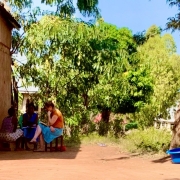
Feature image : A household interview, Mwanza, Tanzania; Credit: David W. Lawson


Over the last decade, my colleagues and I have grappled with the categorization of multiple forms of marriage as definitively costly to women by international development and global health organizations. Chief among these practices are polygynous marriage (sharing a husband with a cowife), ‘child marriage’ (marriage under 18 years), and most recently in our new paper in evolution and human behavior, marriages in which the husband is substantially older than the wife. Each of these phenomena are especially relevant across sub-Saharan Africa where, for example, 40% of girls marry before their 18th birthday.


As an applied anthropologist, I’m immediately wary of ethnocentrism when any practice common in the Global South is categorized as inherently harmful. A widespread tendency to frame these issues through a moralizing lens also raises concern. Plan International’s award winning ‘#stopthewedding’ campaign, for example, presents child marriage as both ‘grotesque’ and demanding of urgent external intervention. Narratives that (over)emphasize the dangers of ‘traditional culture’ can be problematic if they reinforce damaging stereotypes and sideline recognition of broader structural drivers of gender inequality. Anthropologists (and historians) have responded by illustrating the ways in which practices like early marriage may be viewed, not as the product of a morally bankrupt society, but rather rational responses to specific socioeconomic and sociopolitical circumstances.


In this sense, I am also optimistic about the potential contributions of an evolutionary perspective. The polygyny threshold model, for example, suggests that sharing a husband may be beneficial if a man is wealthy enough to provide for multiple wives. A model that receives support in some settings, but not others. And while early marriage has clear potential to be costly (e.g. via elevated risk of early pregnancy), life history theory reminds us that such costs may be tolerated given the benefits of starting a family early when life expectancy is relatively short. Parent-offspring conflict theory may also be useful in understanding why early marriages may be incentivized for parents if not daughters, especially in the context of marriage payments i.e. higher bridewealth or lower dowry for younger brides. Yet, in many cases, early marriage appears driven by female choice (including via elopements against parental will), without clear costs to wellbeing, questioning the notion that women’s agency is restricted. Context is king.


Frankly, without lived experience of societies where such practices are common, let alone the gendered power dynamics of heterosexual marriage and childrearing, I also remain cautious to weigh in on debates about what is good and bad for women. I’ve tried to strike a balance in presenting our research findings as objectively as possible, while being open to rethinking my own assumptions and those of my paradigmatic training. Key here has been a pivot into qualitative methods (spearheaded by Susan Schaffnit), prioritizing the voices of community members deemed at risk, along with collaboration with Tanzanian scholars at the National Institute for Medical Research, especially Mark Urassa, and Joyce Wamoyi.


So, are large spousal age gaps bad for women? Evolutionary psychologists have tended to focus on the mutual benefits of husband-older marriage: with women effectively exchanging youthful fecundity for the wealth and status of senior men. However, even early work in this tradition hints at the limits of this perspective. Kenrick and Keefe for example, report that, while American women find slightly older men attractive at all ages, as men get older they prefer relatively younger and younger women. Such divergent preferences are not mutually compatible.


Surveying Sukuma women living in a rural, but urbanizing community in northern Tanzania, our recent paper provides some potential answers, and raises new questions. Consistent with conflicting preferences, women routinely marry men older than their stated ideals. However, among the large majority married to older men, the age gap did not meaningfully predict self-reported depressive symptomology, autonomy in decision-making (a frequent measure of women’s empowerment), the likelihood of divorce, or reproductive success. While our ability to infer causal relationships is limited with cross-sectional data, these results suggest the magnitude of spousal age differences is of little consequence to women’s wellbeing or fitness – supporting neither a mutual benefits or a sexual conflict model.


Unexpectedly, we also found that marriage to a younger man, a rare arrangement in this community, was associated with relatively poor wellbeing for women. Qualitative findings indicate that such husband-younger marriages are socially shameful; suggesting costs of norm violation along with selection of relatively disadvantaged individuals into atypical marriages. This could come about, for example, if men with otherwise limited marriage prospects partner with older women who themselves are relatively disadvantaged prior to marriage.


These results correspond to our wider findings on polygyny and child marriage, both of which show little evidence of being directly costly to women’s wellbeing, more obviously predicted by factors like access to education and health services. In fact, in past studies we have shown that marrying polygynously is associated with relatively superior child health and food security compared to monogamous marriage; and brides under the age of 18 years report greater decision-making autonomy and community respect than their unmarried peers. As illustrated above, our results also confirm the role of social norms and norm violation in defining feasible options for girls and women. Related research shows that gender norms favoring male authority are represented and reinforced via Sukuma songs about marriage.


On the one hand, knowing that certain marriage practices do not predict poor wellbeing when girls and women are contrasted within a community usefully steers us away from simplistic interventions that might punish the families involved. We have argued, for example, that criminalizing marriage under 18 years may be damaging for female adolescents by limiting options, unless such interventions are also effectively combined with policies addressing the vulnerabilities experienced by those delaying marriage, i.e. exposure to risky sexual behavior, premarital childbearing, and negative social judgements of unmarried women.


Our research cautions against portraying ‘traditional’ marriage practices as the lynchpin, that once unlodged will dismantle patriarchy. But leaves open the possibility that community-wide changes in these practices may nevertheless have positive impacts for women by disrupting wider social norms.


On the other hand, it would be erroneous to imply that our results imply marriage arrangements such as large spousal age gaps are harmless. Critical here is the realization that a girl or woman may opt for a certain marital arrangement as the best available alternative, but the fact that her option set is remarkably limited by wider cultural norms can itself be considered an indirect act of coercion. These instances, perhaps best considered forms of ‘structural violence’, are less often considered within adaptationist frameworks that certainly model sexual conflict, but more often via theorizing about opposing individual optima and emergent strategies, rather than tackling more systemic forms of oppression. The challenge ahead is to disentangle to what extent specific marriage practices are best understood as the product of patriarchal regimes, or themselves a root cause of gender inequality.


Our research cautions against portraying ‘traditional’ marriage practices as the lynchpin, that once unlodged will dismantle patriarchy. But leaves open the possibility that community-wide changes in these practices may nevertheless have positive impacts for women by disrupting wider social norms. We need more social scientists, including evolutionary-minded scholars, with their keen adherence to the importance of context and variation, to apply themselves to these tricky questions. Fundamentally, the question is not if, but when and where, polygyny, early marriage and large spousal age gaps can be harmful to women. We also need to be mindful to make sure that investigation into these sensitive topics is fully inclusive of researchers and communities in the Global South. Above all, as argued recently by Akurugu and colleagues Gender activism needs to be sensitive to contextual norms and respectful of the ‘oppressed’ subjects of ‘liberation”


Read the paper: Lawson DW, Schaffnit SB, Hassan A, & Urassa M. (2021). Shared interests or sexual conflict? Spousal age gap, women’s wellbeing and fertility in rural Tanzania. Evolution and Human Behavior. 42: 165-175

Does the Nose Know? Exploring the links between smell, disgust, and mating strategies

by Marjorie Prokosch, Zachary Airington, and Damian Murray


Our sense of smell helps us to make sense of the world. Our mornings can be improved by smelling a cup of coffee; our nose tells us which foods in the fridge may have turned; the smell of a loved one’s worn shirt transports us to the emotions of that relationship. However, despite how daily experiences are influenced by smell, relatively little research has examined how smell guides human social cognition and behavior.

Previous research points to two social processes in which our sense of smell is especially important: 1) deciding with whom we should form and maintain close relationships, and 2) helping us to avoid things and people that could make us sick. People rate smell as being an important factor in romantic partner choice, and tend to find the smells of a romantic partner to be more comforting and attractive than the scents of others. People also tend to be disgusted by and avoid the sources of foul, disease-connoting odors (like the body odors of sick people). New research is now beginning to examine how individual differences in how well we smell might also shape these processes.

In a recent study, we explored how smelling ability, disease avoidance, and one aspect of close relationships—mating strategy—are related. Here, by mating strategy we refer to people’s interest and participation in monogamous romantic relationships (long-term mating strategy) and short-term sexual relationships (short-term mating strategy). We predicted that smell ability would relate to people’s trait disease avoidance and mating strategies. For example, people who can more easily detect smell-related disease threats might tend to be more disease avoidant. Further, people with greater ability to smell relevant cues of quality or compatibility in potential partners (or, proximally, who might be more easily disgusted by unfamiliar body odors) might be less inclined to engage in short-term sexual relationships. Past research has also found that people high in disease– and sex– related disgust are less inclined to engage in short-term sexual relationships, so we expected to find a similar link in our study, too.

To measure smell ability, we tested participants with Sniffin’ Sticks—a battery commonly used in clinical smell research.  The Sniffin’ Sticks test measures three facets of smell ability: threshold, discrimination, and identification.

Threshold is the ability to detect scents. Participants smelled groups of pens where two were unscented and one contained a concentration of n-butanol, which has an alcohol-like smell. Participants with a more sensitive smell threshold could correctly pick out weaker concentrations of n-butanol. Discrimination is the ability to tell scents apart from one another. Participants smelled groups of pens where two pens contained one scent and a third pen contained a different scent. Participants who were more discriminating correctly picked out more of the uniquely scented pens across trials. Identification measures the ability to recognize and name specific odors. Participants smelled a set of common scents (e.g., leather, fish, banana). Participants with greater identification ability could correctly name more of those scents. In total, the test takes about 45 minutes to administer.  Participants then completed surveys assessing their interest in short and long-term mating strategies, their dispositional sexual and disease-related disgust, and how chronically vulnerable to diseases they felt.

We found that smell discrimination–people’s ability to tell smells apart from one another—was related to people’s interest in short-term mating, such that people who were better at telling smells apart tended to report less comfort with engaging in short-term, sexual relationships.  People with greater smell discrimination also tended to report more disgust towards potentially unpleasant sexual scenarios (such as hearing others have sex). These relationships remained consistent after accounting for other factors that could meaningfully impact performance such as gender, English proficiency, and recent sickness (and after adjusting our false positive rate to account for performing multiple tests).


We found that smell discrimination–people’s ability to tell smells apart from one another—was related to people’s interest in short-term mating, such that people who were better at telling smells apart tended to report less comfort with engaging in short-term, sexual relationships.


Interestingly, we did not find a link between people’s smell discrimination abilities and their disease avoidance tendencies (disgust towards the germ-rich situations, feelings of vulnerability). Superficially, this is inconsistent with past theorizing about smell ability and disease avoidance. Smell threshold and identification abilities did not consistently relate to any of our survey measures. Why might this be the case? It is possible that there are really no relationships of interest between threshold, identification, and mating or disease avoidance. However, it’s also possible that aspects of our testing procedure, like the scents or survey measures we used, interfered with our ability to detect small but meaningful relationships.

Our results leave lingering questions for future work. Why is the ability to tell different scents apart relevant to discomfort with short-term mating situations and strategies? It’s possible that when evaluating potential partners, the ability to discriminate between different scent cues of “good partner fit” is more important than the ability to detect these cues, per se.  People especially sensitive to different scent cue combinations that signal “bad partner fit” might in turn, have a dampened desire to pursue mating strategies that emphasize casual sex. We also do not know which specific scent cues might be important for determining “good” or “bad” partner fit. Scents related to health, immune compatibility, or fertility may be worth investigating.

Another question is whether (or how) specific smelling abilities actually factor into established, long-term relationships. Although our data didn’t imply that smell sensitivity influenced actual relationship status, smell ability may still be important for forming and maintaining long-term, romantic partnerships. For example, some research does suggest that smell is related to sexual satisfaction. Specific smell abilities may play a role in aspects of long-term mating strategies that we didn’t measure in our study.

In sum, does the nose know? Our research suggests, maybe. At least, our ability to detect differences in odor cues seems to be related to our comfort with short-term mating.


Read the paper: Investigating the relationship between olfactory acuity, disgust, and mating strategies

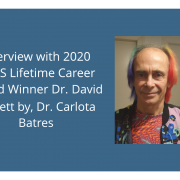
Interview with 2020 HBES Lifetime Career Award Winner David Perrett by Carlota Batres


David Perrett is a professor at the University of St Andrews and the winner of the 2020 Lifetime Career Award for Distinguished Scientific Contribution, which he will receive at the next HBES conference. Carlota Batres, an assistant professor at Franklin and Marshall College and one of Dave’s former PhD students, interviewed him for HBES.


Carlota: Can you tell us how your academic journey started?

Dave: As a kid I grew up in the country in a house between two sloping fields. A small stream ran through the garden and churned up stones full of fossils (shells and trilobites) which I found captivating. My brother pitched a disused aeroplane nose cone (somehow acquired by my father) over the stream so I could sit inside and study life in the mud (e.g., bloodworms and what ate them). This gave me a head start in thinking about evolution and ecology (though those words were not in my head). In my teens, I had inspirational biology and chemistry teachers and took to being a swot.


Carlota: Out of your 300+ publications, which project has been the most fun for you and why?

Dave: Transforming faces lets you to poke fun at villains, politicians and friends, all in the name of science. A newspaper cheered us with the heading “Boffins help Thatcher’s image fade away” when we morphed the prime minister to a challenger.


Carlota: Rumor has it you are retiring. Is this true? If so, what will you miss the most and what are you most looking forward to?

Dave: I am now on a 20% contract but still work most days. I already miss the privilege of planning experiments and analysing experimental data with smart researchers. Exploring data hot off the press is like opening a present, you might guess at what’s going to be inside but the reality of what you find is always more interesting. The young brains that came through the lab invariably brought humour and curiosity, making the work environment happy and stimulating. I tried to keep in mind that the process of science should be enjoyable and is more important than any result. Our lab was open plan which meant I could drift from one colleague to another and disturb all; the proximity and atmosphere kept us all on our toes.

I now look forward to leisurely breakfasts watching garden visitors (predominantly birds). They come each with their own schedule and tricks: squabbling greenfinches, blackcap bullies and feisty robins.


Carlota: You change your hair color often, and many times have several different colors at once (e.g., purple, green, blue). Is there a method to when and what colors you dye your hair?

Dave: There several drivers of colour use. At northern latitudes you need something to cheer you through the long grey months. The coloured appearance of my wife, Anne, and myself also helped mutual recognition (I am fairly face blind). Initially a change in colour would justify new additions to our wardrobe.

The academic system embraces eccentricity so I treated appearance as a kind of handicap; if people took me seriously despite how I looked then what I was doing must be OK. It is a mark of independence or stupidity, or both. I have encountered disapproval only 2 or 3 times (e.g., looking for a place to stay in Niagara Falls, a door was closed in my face). I think people are often amused, so if our eyes meet there is a positive expression to react to.


Carlota: Can you tell us about your unique exercise and eating routines?

Dave: Hmm! An earlier me loved to run most days and explore wherever I was (i.e. get vaguely or actually lost). The best times were running at Pete Henzi and Louise Barrett’s study site in the Karoo semi desert among giraffes and antelope, hoping that 4 of the big 5 would take no notice of me. Running kept me warm at -24°C, when snow lined my eyebrows and an icicle hung from my nose, and running cooled me while lapping small sweaty tropical islands.

I rationalised that the exercise needed fuel so took to eating 4-5 meals a day. Vinet Coetzee taught me about 2nd breakfast during her PhD in the lab. Since then I have disgusted/amused staff in the coffee room eating lentils or cold beans topped with chilli as the perfect mid-morning pick-me-up. Now diet is just entertainment as I eat similarly but have had to stop running through injury.


Carlota: What is something people at HBES would be unlikely to know about you?

Dave: I failed English Language O Level and have been so lucky to have had Anne using her talent and training to check every work word I’ve put my name to. We enjoy flowers and have a garden with special places for poppies (every type from the blousy Shirley to the sacred Himalayan blue). Creepy crawlies are just as important to us, so we use a UV night light to attract moths in our garden and go on fungal forays turning up oddities like a red club fungus that eats insects.

HBES 2021 Election Results